
|
|
|
|
Peacebuilding Conflict Resolution on Identity Conflict, Forgiveness, and Reconciliation: An Approach from Social Psychology to Resolving Violent Identity Conflict and Group Conflict
Bora Phan 1

1 Founder,
Peace Family and Development Organization (PFDO), National University of
Cheasim Kamchaymear, Kampong Cham Campus (NUCK), National Twinning Coordinator
(SVDP Cambodia), Cambodia
|
|
|
ABSTRACT |
|
|
This work
explores the intricate dynamics of identity conflict through the prism of
social psychology, emphasizing the significance of forgiveness and
reconciliation as essential instruments for resolving violent group
conflicts. Identity disputes, which are often brought on by deeply rooted
cultural, ethnic, or religious divisions, can lead to protracted hostilities
and violence. We propose that understanding the psychological underpinnings
of these conflicts can enhance the peacebuilding process. Using well-established
social psychology concepts, the study argues that forgiveness is a collective
effort that can break cycles of retaliation and hostility rather than just an
individual act. Additionally, reconciliation is portrayed as a complicated
process that involves acknowledging past wrongs, empathy for the adversary,
and a shared commitment to peaceful coexistence. We demonstrate how
psychological interventions centered on identity awareness, emotional
regulation, and group dynamics can promote transformative conversations
between disputing parties using case studies and empirical data. We offer
practitioners engaged in peacebuilding initiatives a comprehensive approach
by creating spaces that encourage communication and psychological healing,
ultimately helping to resolve identity conflicts in a sustainable manner.
According to our research, incorporating social psychology techniques into
peacebuilding programs can greatly increase the likelihood that conflicts
will be resolved successfully, fostering harmony in a variety of societies. |
|||
|
Received 18 October 2025 Accepted 21 November 2025 Published 20 December 2025 Corresponding Author Bora Phan,
phanbora17@gmail.com DOI 10.29121/Shodhgyan.v3.i2.2025.70 Funding: This research
received no specific grant from any funding agency in the public, commercial,
or not-for-profit sectors. Copyright: © 2025 The
Author(s). This work is licensed under a Creative Commons
Attribution 4.0 International License. With the
license CC-BY, authors retain the copyright, allowing anyone to download,
reuse, re-print, modify, distribute, and/or copy their contribution. The work
must be properly attributed to its author.
|
|||
|
Keywords: Conflict
Resolution, Forgiveness, Reconciliation, Identity Conflict, Group Conflict |
|||



1. INTRODUCTION
The importance of peacebuilding in addressing identity conflict has grown in today's diverse communities Aitken (2007), Phan et al., Simonsen (2005). Identity conflicts, often rooted in ethnic, religious, or cultural affinities, can escalate into violent conflicts that lead to fatalities and significant social unrest Haynes and Politics (2009), Parker (2015). Understanding and resolving these conflicts requires a careful analysis of their underlying causes in addition to the use of effective resolution and reconciliation strategies Rasheed and Munoz (2016), Ross and Studies (2000). Reconciliation and forgiveness are key concepts in the transformative process of peacebuilding Boehle (2021), Kalayjian and Paloutzian (2009). These elements contribute to the healing of divided societies by enabling individuals and groups to set aside past grievances Kalayjian and Paloutzian (2009). Social psychology offers useful insights into human behavior, group dynamics, and the impact of identity on conflict by offering frameworks that may facilitate understanding and resolution Tint, (2009), Worthington Jr and Aten, (2010). One of the most catastrophic periods in Cambodia's history is still the Khmer Rouge regime, which ruled from 1975 to 1979 and was characterized by severe violence, widespread atrocities, and significant social unrest Cunha et al. (2015), Kiernan (2021). An estimated 1.7 million people perished as a result of executions, forced labor, and starvation during the regime's attempt to turn Cambodia into a classless agrarian society under Pol Pot's leadership Kiernan (2025), Pina et al., (2011), Roth (2016). In addition to wreaking havoc on the populace, this genocide left behind severe psychological wounds that still influence Cambodian society today Nou (2024), Van Schaack et al., 2011). Many communities were terrified and distrustful of the Khmer Rouge because of their extreme policies, which were intended to destroy traditional social structures and eradicate alleged enemies Atkinson (2013), Ayres (1999), Delano and Knottnerus (2018). The regime's violent methods, which included focusing on professionals, intellectuals, and members of ethnic minorities, created a culture of violence and repression that has had a long-lasting effect on intergroup relations and national identity Delano and Knottnerus (2018), Tyner (2017). The lingering difficulties in resolving historical grievances and promoting reconciliation in a society still dealing with the fallout from its past are clear indications of the trauma's legacy Moon, (2009), Rigby and reader, (2012). The difficult task of bringing Cambodia's history together while promoting social cohesion among its diverse populace has been faced since the fall of the regime Diepart and Dupuis (2014). A larger dedication to justice and reconciliation is reflected in initiatives to address the past, such as the creation of the Extraordinary Chambers in the Courts of Cambodia (ECCC) to try Khmer Rouge leaders Hirsch and Scurrah (2015), Hirsch (2016). However, the discourse surrounding forgiveness and reconciliation is still shaped by the intricacies of collective memory and identity, underscoring the necessity of a sophisticated comprehension of the psychological processes at work in post-conflict societies Kidron (2021),Willis (2014). Forgiveness, reconciliation, and conflict resolution are complicated by Cambodia's long history of violent identity and group conflict, especially after the Khmer Rouge regime Kidron (2021), Pham et al. (2019). A sophisticated grasp of the processes that can promote healing and social cohesion is necessary because the psychological wounds caused by this turbulent time have influenced collective identities and intergroup relations Jeffery (2015), McGrew (2011). Social psychology provides important insights into these processes by highlighting how identity, memory, and interpersonal dynamics shape conflict and how it is resolved Hein (2015), Manning et al. (2019). Research suggests that how groups view one another and negotiate their pasts is significantly influenced by collective memory Hirsch (2019), Verovšek and Identities (2016). The trauma of the Khmer Rouge era in Cambodia still affects social interactions and group identities today, frequently sustaining cycles of hostility and distrust Lee (2022), Tyner (2017). Intergroup contact theory Lytle (2018), Pettigrew et al. (2011), Phan et al. (2025), Turner and Tajfel (1996) contends that encouraging constructive interactions between opposing groups can lessen prejudice and advance understanding, while social identity theory Knippenberg and Ellemers (1990) explains how group affiliations can intensify conflicts Turner and Oakes (1986), Turner and Tajfel (1996). The potential of forgiveness as a transformative process that can end the cycle of violence and promote reconciliation has been emphasized in recent studies Gaertner (2011), Phan et al. (2025). Initiatives to encourage communication and empathy between erstwhile enemies have demonstrated promise in the Cambodian context in resolving historical grievances and creating a common future vision Hinton et al. (2011), Phan et al. (2025). In order to examine successful methods for resolving disputes, forgiving others, and fostering reconciliation in Cambodia Dicklitch and Malik (2010), this review article attempts to compile the most recent social psychology research findings McGrew (2011), Pham et al. (2019). This work aims to advance our understanding of how to deal with the intricacies of identity and group conflict in a post-conflict society by analyzing the interaction between psychological mechanisms and sociocultural factors Ćorkalo Biruški (2017), Smith (2013). This approach acknowledges the complexities of human emotions and the deep-rooted fears that often accompany identity issues Pain (2014). We can more effectively navigate the path to lasting peace if we consider forgiveness as a psychological process and reconciliation as a societal objective Floro (2025), Kalayjian and Paloutzian (2009). Examining how these elements interact can help identify strategies that not only address the immediate issues but also encourage lasting harmony and cooperation between opposing groups Green (2009), Tint (2009). This study will address the psychological foundations of identity-related conflicts, the role of forgiveness in lowering animosity, and the importance of individual and community-based reconciliation initiatives Green (2009), Massey (2009). By using this lens, we hope to shed light on ways to build a peaceful society in the face of violent identity conflicts Kohen (2009), Massey (2009).
2. Literature Review
Particularly in post-conflict societies like Cambodia Gellman (2010), the literature on conflict resolution, forgiveness, and reconciliation Kalayjian and Paloutzian (2009) has come to acknowledge the significance of social psychological frameworks in comprehending and resolving violent identity and group conflicts Worthington et al. (2015). Historical grievances and collective memories continue to influence intergroup relations and societal dynamics in the complex landscape left by the Khmer Rouge regime Bernath (2016), Hinton and Lesley (2025).
2.1. Identity
In identity conflict, identity refers to the complex and ever-changing self-concepts that people and groups have Lim (2016), Sharma (2013), which are influenced by social, historical, and cultural elements Meijers (1998), Ulver and Östberg (2014). The Khmer Rouge's legacy, which aimed to overthrow established social structures and impose a radical vision of a classless society Ayres (1999), Goldstein and Hiebert (2016), has a significant impact on identity in Cambodia Rakower (2004). Ethnic, national, and social affiliations are among the many identities that have developed as a result of this historical trauma; these can serve as sources of social division as well as personal meaning Hartmann et al. (2019), Hinton et al. (2011).
Identity conflicts in Cambodia following the Khmer Rouge often take the form of tensions between urban and rural populations Lim (2016), Singh (2017), as well as between various ethnic groups, such as the Khmer majority and minority groups like the Cham and Vietnamese Kiernan (2021), Thun and Keo (2021). According to Bar-Tal (2009), these conflicts are made worse by shared memories of oppression and violence, which can increase in-group solidarity and out-group animosity Frewer (2014), Ngoun (2016). As individuals and groups attempt to resolve their past grievances while promoting social cohesion, the fight for acceptance and validation of diverse identities is a crucial part of the reconciliation process Al-Dajani and Leiner (2022), Verdeja (2017).
Developing successful conflict resolution techniques requires an understanding of identity in the Cambodian context Gellman (2010), Haynes (2009). In order to reduce tensions and promote reconciliation Haynes (2009), it emphasizes the necessity of addressing the psychological and social aspects of identity conflicts and encouraging communication and understanding between opposing groups Haynes (2009), Lee (2021). Stakeholders can endeavor to create a more inclusive and peaceful society by recognizing the intricacies of identity and the effects of past trauma Amer (1999), Takei and Politics (1998).
2.2. Group identity
The collective self-perception and sense of belonging that people get from belonging to a specific social, ethnic Abrams and Hogg (2001), or cultural group is known as group identity Abrams and Hogg (2001), AhnAllen et al. (2006). Because it affects attitudes, behaviors, and perceptions of both in-group and out-group members AhnAllen et al. (2006), group identity becomes a crucial factor affecting intergroup relations in the context of identity conflict Tajfel and Turner (2004). The Khmer Rouge regime's legacy in Cambodia has had a significant impact on group identities, which has increased tensions between different ethnic and social groups, such as the Vietnamese minority, the Cham Muslims, and the Khmer majority Thun and Keo (2021), Williams (2023).
The Khmer Rouge's historical trauma has created a complex terrain of group identities where social dynamics are still influenced by collective memories of oppression and violence Becker et al. (2000), Nou (2024). For example, the Khmer Rouge's efforts to destroy traditional social structures have left lasting damage Nou (2024), encouraging in-group solidarity among Khmers while also sustaining distrust and hostility toward those who are perceived to be outside their group Evrard and Destrooper (2025). In Cambodian society, where historical grievances frequently fuel identity conflicts, this phenomenon is demonstrated by the ongoing struggles for recognition and validation of diverse identities McCravy (2017), Taylor et al. (2023).
Addressing the psychological and social aspects of identity conflict requires an understanding of group identity in the Cambodian context Choi et al. (2008), Hsu et al. (2004). It draws attention to the necessity of tactics that foster understanding and communication between groups, enabling social cohesion and reconciliation between opposing factions Havemann and Pridmore (2005), Tobias et al. (2011). Stakeholders can endeavor to create a more inclusive society that celebrates its variety of identities by recognizing the intricacies of group identity and the effects of past trauma Joma and Lekan (2024), Nafari and Ruebottom (2025).
2.3. Sense of Belonging
The emotional experience of being accepted and valued within a specific group is known as "sense of belonging," and it has a big impact on both group dynamics and individual identity Mahar et al. (2013), McClure and Brown (2008). Strong feelings of belonging can strengthen group identity in the face of identity conflict McClure and Brown (2008), strengthening group divisions while also encouraging solidarity among members Allen et al. (2021), Wilczyńska et al. (2015). The Khmer Rouge regime's legacy has had a significant impact on people's sense of belonging in Cambodia, influencing how different social and ethnic groups view one another and themselves Allen et al. (2021), Waller (2021).
Due to the Khmer Rouge's efforts to establish a homogeneous society, several ethnic groups including the Vietnamese and Cham were marginalized, which has caused a fractured sense of belonging in Cambodian society Cook et al. (2009), Kane et al. (2024). Many Cambodians have strong ties to their ethnic and cultural heritage, and the trauma of previous violence has made them even more desperate to fit in Kogure and Takasaki (2024), Sinanan (2011). This phenomenon can result in increased in-group loyalty, where people tend to prioritize their group affiliations over out-group relationships in order to feel secure and secure Pina e Cunha et al. (2010), Shapiro-Phim (2008).
Furthermore, the difficulty in gaining acceptance and validation for a variety of identities in Cambodia emphasizes how crucial it is to promote a sense of community that cuts across social and ethnic boundaries Bennett (2018), McLaughlin (2012). A more inclusive sense of belonging that supports social cohesion and reconciliation can be facilitated by initiatives that foster intergroup communication and understanding DeYoung et al. (2020), McLaughlin (2012). Stakeholders can endeavor to mend historical wounds and create a more peaceful society by addressing the psychological and social aspects of belonging DeYoung et al. (2020), Hoefinger (2014).
2.4. Personal identity
The term "personal identity" describes the distinctive traits, life experiences, and convictions that set a person apart from others Drummond (2021), Schechtman (2005). Its many facets, such as individual choices, life experiences, and personal values, all work together to influence how a person views themselves and their role in the world Čapek et al. (2021), Swann Jr et al. (2012). Personal identity can have a big impact on how people handle their relationships with others when they are experiencing identity conflict Swann Jr et al. (2012), especially in societies where social divisions and historical trauma are prevalent Crowell (2021), Hilhorst and Philosophy (2005).
The Khmer Rouge regime's legacy has had a significant influence on people's identities in Cambodia as they struggle with the memories of oppression, loss, and violence Pham et al. (2019), Sirik (2020). Many Cambodians have a complex sense of self that is entwined with their collective history and cultural heritage as a result of the trauma they endured during this time Gray (2014), Lee (2022). Family stories about survival, resiliency, and the fight for acceptance in a culture still recovering from the past, for example, can influence a person's sense of self Saltzman et al. (2013), Walsh (2003).
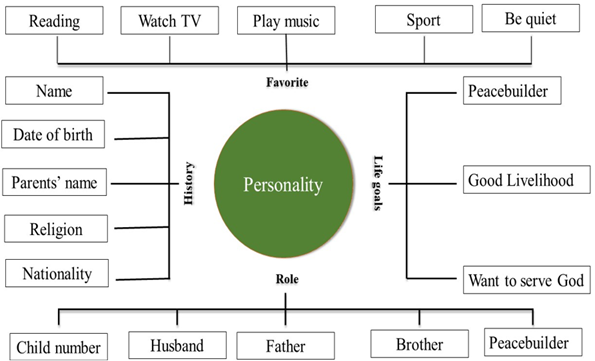
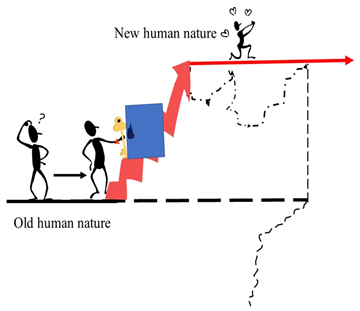
In the Cambodian context, where people frequently find themselves juggling multiple identities at once, the interaction between personal and group identities is especially pertinent Hoefinger (2011), Su Kim and Education (2003). People may feel divided between their own personal convictions and the expectations of their social or ethnic groups, which can result in internal conflicts Aloyo et al. (2023). Addressing the psychological aspects of identity conflict requires an understanding of personal identity in this context, which emphasizes the necessity for people to make sense of their own experiences in relation to the larger narratives of their communities Aloyo et al. (2023). Healing and reconciliation can be facilitated by fostering a sense of self that recognizes both individual experiences and collective histories Miller (2008). Programs that promote dialogue, storytelling, and introspection can enable people to express who they are in ways that promote empathy and understanding across social boundaries Lasky (2005), Wohl et al. (2014). Stakeholders can strive to create inclusive spaces that respect a range of experiences and promote social cohesion in post-conflict societies by acknowledging the complexity of personal identity (See Figure 1)
Figure 1
|
Figure 1 Personal Identity Created by Personal Favorite, Personal Life Goals, Personal Role and Personal History |
A person who struggles with competing goals and interests that influence who I am. Writing is a favorite of mine since it allows me to express my creativity and individuality McLaughlin et al. (2010). However, one frequently finds oneself torn between following their passion for writing and the expectations of society to pursue a more traditional career path, which can leave them feeling uncertain and frustrated Galinsky et al. (2005), McLaughlin et al. (2010).
In terms of my own life objectives, I want to use social advocacy to significantly influence my community Jason et al. (2015). However, I have trouble striking a balance between this goal and the demands of a traditional career and financial security Brown et al. (2015). I experience internal conflict as I balance the conflicting demands of my goals and life's realities because of this tension Nilsson et al. (2011). As I work to encourage others and look for recognition for my own efforts, my personal role frequently alternates between that of a leader and a supporter Bowler et al. (2010). This dichotomy can cause conflict because I occasionally struggle to decide whether to put my needs or those of others first, which makes me feel inadequate and guilty Walumbwa et al. (2008).
Experiences with cultural diversity and familial expectations have influenced my personal history and molded my perspective on conflict and identity Giguere et al. (2010). Being raised in a multicultural setting has frequently made me feel under pressure to fit in with various cultural norms, which has caused me to struggle with issues of identity and belonging Johansen and Varvin (2020). My desire to resolve these tensions and discover a unified sense of self is fueled by the profound awareness of the complexities of personal conflict that these experiences have given me Ting-Toomey et al. (2000).
3. Identity Conflict
The Khmer Rouge regime's historical trauma, which aimed to overthrow established social structures and impose a radical vision of a homogenous society, is a major contributing factor to identity conflict in Cambodia Bourdier (2023), Putra et al. (2024). About 1.7 million people died during this genocide, which has left deep psychological scars on the nation and continues to influence the identities of people and groups there Caspar (2024), Williams (2020), Williams and Jessee (2024).
Due to the Khmer Rouge's legacy, there is a complex interplay of identities, and social, cultural, and ethnic ties frequently turn into points of contention Williams and Jessee (2024). For example, minority groups like the Vietnamese and Cham Muslims, who have historically experienced marginalization and discrimination, are often compared to the Khmer majority in terms of their sense of identity Münyas (2008). As people negotiate their individual and societal identities in a society still dealing with the fallout from its violent past, this dynamic foster identity conflicts Bennett (2024).
Furthermore, the fight for acceptance and validation of various identities in Cambodia emphasizes how critical it is to resolve past grievances and promote intergroup communication Haynes (2009). Collective memories of violence and oppression can increase in-group solidarity and out-group hostility, exacerbating the ongoing difficulties of social cohesion and reconciliation Nicholson and Howarth (2018), Schori‐Eyal et al. (2014).
A comprehensive approach that takes into account the psychological and social aspects of identity conflicts is necessary to comprehend them in the Cambodian context Nicholson and Howarth (2018). Stakeholders can attempt to mend the scars of the past and create a more accepting society that values its many identities by encouraging empathy, understanding, and communication between opposing groups McLaughlin and van der Marel (2005).
4. Group Conflict
The history of the Khmer Rouge regime, which aimed to eradicate alleged enemies and impose a radical vision of a homogeneous society, has a significant impact on group conflict in Cambodia Kiernan (2002), Kubota (2013). Approximately 1.7 million people died during this genocide, which left lasting psychological scars and rifts between different ethnic and social groups Kiernan (2002), Kissi (2004).
Significant group conflicts have resulted from the Khmer Rouge's legacy, especially between the Khmer majority and minority groups like the Vietnamese and Cham Muslims Bruckmayr (2015), Thun and Keo (2021). These conflicts can increase tensions and create a climate of mistrust because they are frequently based on historical grievances, cultural differences, and competition for resources Caswell (2012). Social disintegration and the marginalization of people who do not fit the prevailing narrative result from the frequent comparison of minority groups' identities with that of the Khmer majority Hossain (2024).
Furthermore, the difficulty in gaining acceptance and validation for various identities in Cambodia emphasizes how critical it is to resolve these intergroup disputes via communication and peacemaking Ross (2000). Intergroup relationships are still shaped by the collective memories of oppression and violence, which frequently lead to increased in-group solidarity and out-group animosity Ron and Maoz (2013).
Promoting empathy and understanding between opposing groups is crucial to resolving group conflict in Cambodia Fisher (1993), Kelman (1998). A more inclusive society that values its many identities can be achieved through programs that promote intergroup communication and cooperation. These efforts can aid in bridging gaps and promoting social cohesiveness Fisher (1993). Stakeholders can attempt to mend the scars of the past and create a more peaceful future by recognizing the complexity of group conflict and the historical background that influences it Ellis (2006), Nagda (2006).
5. Identity Conflict Resolution
Resolving identity conflicts is a crucial task in Cambodia, especially in the wake of the Khmer Rouge regime Ellis (2006), which caused permanent divisions among different ethnic and social groups and left severe psychological scars on the country Ellis (2006), Stephan (2008). Significant identity conflicts have arisen as a result of this era, especially between the Khmer majority and historically marginalized and discriminated-against minority groups like the Vietnamese and Cham Muslims Farouk (2015).
Adopting tactics that encourage communication, comprehension, and peacemaking between opposing groups is crucial to resolving these identity conflicts Ross (2000), Rothman and Olson (2001). One strategy is to encourage contact between groups, which has been demonstrated to improve empathy and lessen prejudice Berger et al. (2018), Murrar et al. (2017). Collaborative projects and community-building exercises are examples of initiatives that promote shared experiences and can aid in bridging gaps and fostering a feeling of unity among disparate groups Brenick et al. (2019), Murrar et al. (2017).
In addition, resolving historical grievances is essential to Cambodian conflict resolution Adler et al. (2006), Singh (1999). A more inclusive narrative that values the contributions and rights of all groups can be fostered and healing can be facilitated by acknowledging the past and offering forums for discussion of historical injustices Hughes (2001). An essential step in this direction is the creation of the Extraordinary Chambers in the Courts of Cambodia (ECCC) Scheffer (2008), which aims to promote national healing while bringing justice for the crimes committed during the Khmer Rouge era Meisenberg and Stegmiller (2016), Scheffer (2008).
Resolving identity conflicts also heavily relies on education Bekerman and Maoz (2005). Future generations will be more prepared to handle the challenges of identity in a multicultural society if lessons about diversity Bekerman and Maoz (2005), tolerance, and the value of comprehending various viewpoints are incorporated into the curriculum Schachter and Rich (2011), Shapiro (2010).
In conclusion, resolving identity conflicts in Cambodia necessitates a multipronged strategy that prioritizes communication Enyedy et al. (2006), Shapiro (2010), respect for past wrongs, and education Enyedy et al. (2006). Through cultivating empathy and understanding between opposing groups, stakeholders can endeavor to create a society that is more inclusive and cohesive and celebrates its variety of identities Enyedy et al. (2006).
6. Forgiveness
6.1. Cognitive Theory of Forgiveness
According to the cognitive theory of forgiveness, changing one's thoughts Cioni and Health (2007), beliefs, and attitudes toward the offender is the main mental process involved in forgiving someone Carone Jr and Barone (2001), Cioni and Health (2007), Phan et al. (2025). This theory highlights the function of cognitive restructuring Navidian and Bahari (2014), in which people reevaluate how they view the offense and the perpetrator, which eventually results in a decrease in negative emotions like resentment and anger McCullough et al. (2013), Navidian and Bahari (2014). According to this viewpoint, forgiveness is a conscious decision that entails comprehending the circumstances and motivations of the offender McCullough et al. (2013), Phan et al. (2025), which can promote healing and reconciliation, rather than just an emotional reaction Fehr et al. (2010), McCullough et al. (2013).
Given the historical trauma connected to the Khmer Rouge regime Fehr et al. (2010), the cognitive theory of forgiveness is especially applicable in the context of Cambodia Fehr et al. (2010), Menahem and Love (2013). Individuals and communities impacted by the atrocities have found it extremely difficult to forgive because of the collective memory of violence and loss Fehr et al. (2010). Because cognitive restructuring encourages people to reframe their understanding of the past and the people involved, it can be extremely helpful in Cambodians processing their experiences and moving toward forgiveness Baskin et al. (2004), Menahem and Love (2013).
7. Forgiveness
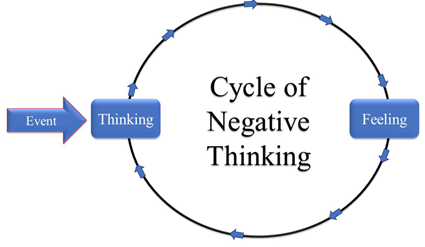
Forgiveness in Cambodia is intricately linked to the country's collective trauma from the Khmer Rouge era Hinton (1997), Pham et al. (2019). Forgiveness is difficult for many people because they experience anger and betrayal (See Figure 2). On the other hand, healing may be facilitated by adopting the cognitive theory of forgiveness McCullough (2001), North (1987). People can start to change their viewpoints by actively attempting to comprehend the reasons behind the Khmer Rouge's actions and acknowledging the larger background of fear and ideology that supported the regime Enright and Fitzgibbons (2000), Sells and Hargrave (1998).
Figure 2
|
Figure 2 |
Figure 2 A self-reinforcing loop between thoughts and emotions is produced by the negative thought cycle. It starts with a pessimistic thought, like "I'm not good enough," which sets off a corresponding emotion, usually anxiety or sadness. The original idea is then strengthened by these feelings, which give it a more genuine and legitimate feel.
These negative thoughts can become more and more prevalent as the person ruminates on them, which can lower motivation and self-esteem Kolubinski et al. (2016). Basically, the more negative thoughts one thinks, the stronger the emotional reaction gets, which feeds the cycle even more and makes it harder to escape Phillips and Hine (2016).
In order to break this cycle, deliberate effort and interventions like cognitive-behavioral techniques are needed to confront negative thoughts and encourage more balanced thinking Borton et al. (2005). People can develop healthier emotional reactions and eventually change their thought patterns by breaking this cycle Lyubomirsky and Nolen-Hoeksema (1995).
In this context, forgiveness means making a deliberate choice to let go of grudges and work toward a more harmonious coexistence Enright and Fitzgibbons (2000), not forgetting or accepting the past Enright and Fitzgibbons (2000), McCullough and Witvliet (2002). This cognitive restructuring can be facilitated by programs that encourage communication and understanding between various groups McCullough and Witvliet (2002), giving people a safe space to share their experiences and stories Clark (2013), Hope et al. (2010). Cambodians can strive toward a communal healing process that pays tribute to the departed while clearing the path for a more inclusive and peaceful future by cultivating empathy and compassion Deblinger et al. (2016).
7.1. The Effect of Non-Forgiveness on Personal Identity
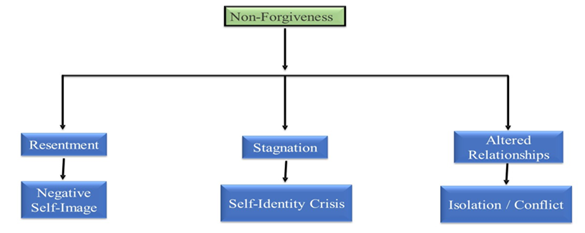
A person's sense of self can be greatly impacted by unforgiveness, which can have a variety of psychological and emotional repercussions Akhtar et al. (2017), Wohl et al. (2008). I've listed the main effects and their relationship to personal identity below, along with a straightforward diagram that shows the relationships Fisher and Exline (2010).
Key Effects of Non-Forgiveness
1) Resentment
and Anger:
Keeping grudges can result in persistent anger and resentment, which can influence a person's personality and social interactions Tangney et al. (1996).
2) Stagnation
in Personal Growth:
Mental blocks brought on by unforgiveness can impede one's ability to grow as a person and advance in life Ricciardi et al. (2013).
3) Altered
Relationships:
One's social identity may be shaped by relationships being impacted by an inability to forgive, which may result in conflict or isolation from others Woodyatt and Wenzel (2013).
4) Self-Identity
Crisis:
Confusion about one's values and beliefs can result from a persistent battle with forgiveness, leading to a crisis in one's sense of self Smart Richman and Leary (2009).
5) Negative
Self-Perception:
The emotional strain of unresolved problems can cause people to develop a negative self-image, which can impact how they view themselves in relation to other people Khayyer et al. (2019).
Non-forgiveness has consequences that go beyond fleeting emotions; it radically changes a person's identity and how they engage with the outside world Khayyer et al. (2019), Rabinovich and Morton (2016). An important first step toward recovery and personal growth may be acknowledging this influence Rabinovich and Morton (2016). This graphic illustrates how personal identity is impacted by unforgiveness Figure 3.
Figure 3
|
Figure 3 |
Figure 3 Inability to forgive frequently results in long-standing resentment, which can skew one's perception of oneself and produce a negative self-image. People's perceptions of themselves might be shaped by their complaints, which could impede their personal development and ultimately result in an identity crisis. Relationships can be changed by this internal conflict, which can lead to miscommunications and a decrease in emotional intimacy.
Isolation can happen when resentment persists, leading people to distance themselves from support networks and cultivate confrontations in social situations Creasy (2025), Meltzer and Musolf (2002). In addition to perpetuating self-defeating ideas, this cycle makes it difficult to build positive relationships with other people Baumeister and Scher (1988), Slusher and Anderson (1989). Restoring relationships and self-identity while promoting a sense of peace and belonging requires addressing non-forgiveness Paloutzian and Sagir (2019), Vandevelde (2013).
8. Impact of on Human Security
The psychological, social, political, and economic aspects of human security are all seriously threatened by unforgiveness Akhtar et al. (2017), Amstutz (2005). Psychologically, people who are dealing with unresolved grievances may suffer from increased anxiety, persistent stress, and even symptoms of PTSD, which can negatively impact their mental health in the long run Everett (2015), Lewis et al. (2017). Non-forgiveness can cause social discord by severing ties within the community, undermining trust, and igniting disputes O’Shaughnessy (1967).
In terms of the economy, communities that suffer from a lack of forgiveness typically have fewer chances for cooperation and development, which exacerbates poverty and economic disparities Beech et al. (2021), Smith et al. (2022). Politically speaking, a lack of forgiveness can weaken justice, destabilize government, and incite violent conflicts, creating an atmosphere that is conducive to conflict and human insecurity Akintayo (2025), Van Laar et al. (2019). As a result, the consequences of not forgiving go well beyond personal experiences and seriously compromise the fundamental principles of human security Karremans and Van Lange (2008), Mihalache (2012).
Figure 4

|
Figure 4 Diagram of Non-Forgiveness Impact on Human Security |
Figure 4: This framework shows how a cycle of instability and underdevelopment in multiple domains can result from a lack of forgiveness, which has a profound impact on human security.
Because it prolongs psychological suffering, social unrest, economic instability, and political conflict, unforgiveness seriously compromises human security Leaning and Arie (2000), Poku et al. (2007). People who are unable or unwilling to forgive frequently suffer from increased anxiety and ongoing stress, which can result in mental health conditions like PTSD Minow (1998), Poku et al. (2007). In addition to having an impact on individuals, this psychological load also splits communities, undermining trust and creating a hostile atmosphere Abu-Ras et al. (2024), Ide et al. (2021).
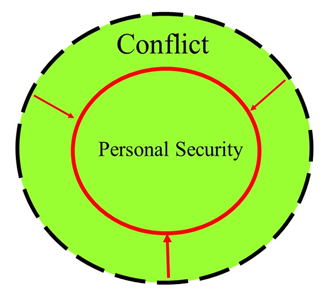
Economically, areas characterized by a lack of forgiveness typically experience less cooperation and greater poverty because unresolved grievances obstruct social advancement and worsen inequality Versey (2023). Politically, a lack of forgiveness can cause violent conflicts and undermine governance systems, undermining justice and endangering human security Roelofs (2020). As a result, the consequences of not forgiving go well beyond interpersonal interactions and have an impact on the core structure of society Figure 5
Figure 5
|
Figure 5 Human Security |
Figure 5: Personal security is significantly impacted by conflict, which frequently leads to social, emotional, and physical vulnerabilities. It interferes with day-to-day activities and jeopardizes people's safety and wellbeing, which has a number of negative effects.
8.1. Physical susceptibility
Direct physical harm, including injury or death, can result from conflicts Duckworth and Iezzi (2010), Husky et al. (2020). Violence is common in conflict areas, which leads to mass displacement and a sharp rise in death rates as people leave their homes in quest of safety Cordell and Wolff (2011), DiPietro (2019).
8.2. Psychological and Emotional Effects
Conflict can have serious psychological effects Emmons and King (1988), King and Emmons (1990). People who are exposed to violence frequently suffer from mental health conditions like post-traumatic stress disorder (PTSD), anxiety, and depression, which negatively impacts their general sense of security and mental health Davies and Cummings (1994), Emmons and King (1988), King and Emmons (1991). Living in a conflict zone can cause trauma that can affect a person's personal safety and the stability of society for a long time Cummings and Davies (2002), Halperin and Pliskin (2015).
8.3. Disruption in Society
Conflicts cause people to become isolated and distrustful of one another by upsetting social structures and community ties Krause (1991), Vallacher et al. (2013). In addition to impeding collective security measures, this disintegration of community ties can increase people's susceptibility to exploitation and violence Somasundaram and Sivayokan (2013), Welch et al. (2005).
8.4. Economic Repercussions
Personal security is further threatened by the economic effects of conflict Lohrmann (2000), Raleigh (2011). Increased poverty, unemployment, and limited access to essential services are all consequences of war and violence, and these factors make people more vulnerable to different security risks Ajodo-Adebanjoko (2019), Fritsche et al. (2011).
In conclusion, physical harm, psychological trauma, social disintegration, and unstable economies are all ways that conflict seriously compromises personal security Coleman (2003), Pedersen (2002). Conflict has a multifaceted impact that necessitates all-encompassing strategies to lessen its effects and give people their security back Pérez de las Heras, B. (2020).
9. Forgiveness and Reconciliation
The foundation for long-term viability and advancement in conflict resolution is forgiveness Boehle (2021), Fincham et al. (2004), Lahiri and Padmakumari (2025), Phan et al. (2025). It helps people and groups to put aside past grievances, which promotes healing and restores trusttwo things that are necessary for enduring peace Figure 6.
Figure 6
|
Figure 6 |
Figure 6 The foundation of any meaningful reconciliation is forgiveness. Healing is made possible when people decide to forgive, letting go of the weight of bitterness and rage. The goal of this act is to release oneself from the emotional burden that impedes personal development, not to justify past behavior.
Forgiveness is the cornerstone of long-term reconciliation because it heals and rebuilds trust between communities and individuals affected by conflict Bigabo et al. (2025) , Fehr and Gelfand (2012). By allowing people to let go of their resentment and anger, forgiveness fosters emotional healing and makes it possible for people to understand and have meaningful conversations Menahem and Love (2013), Murphy and mercy (1988). This process is necessary to rebuild relationships and create a cooperative environment Doz (1996), Li et al. (2025).
Furthermore, forgiveness fosters a culture of compassion and empathy, both of which are essential for halting the spread of conflict and violence Child et al. (2019), Sanders et al. (2025). Communities grow stronger as trust is restored, becoming better able to handle problems together and cooperate to achieve shared objectives Siegel (2001), Tjosvold (1998). Essentially, forgiveness supports the social cohesiveness required for enduring peace and stability in addition to aiding in individual healing Robina-Ramírez et al. (2022), Siegel (2001).
9.1. Reconciliation and Establishing Trust
By letting go of grudges and anger, forgiveness makes room for emotional recovery Candelarie (2023), Kyprianides and Taylor (2024). In conflict situations, where trauma frequently impedes attempts at reconciliation, this procedure is essential Candelarie (2023), Clark (2012). Rebuilding interpersonal relationships and community cohesion is facilitated by environments that foster forgiveness, according to studies Thompson et al. (2017), Webb et al. (2013).
9.2. Avoiding Conflict Recurrence
Societies can stop violence from happening again by addressing the underlying causes of disputes and encouraging forgiveness Koyama (2025), Roy (2018). In contrast to cycles of retaliation, forgiveness promotes communication and understanding, allowing disputing parties to participate in productive dialogue Mross et al. (2022), Roy (2018).
9.3. Encouraging Peace That Is Sustainable
Because it promotes a culture of empathy and compassion, forgiveness is associated with lasting peace Bond (2014), Johnson et al. (2012). It fosters cooperative problem-solving as opposed to confrontation and gives people the emotional fortitude they need to resist provocations Bond (2014), Samuels (2005). Communities can thus establish a more stable and peaceful atmosphere that supports growth and prosperity Annan (1998), Bajaj and Chiu (2009).
In conclusion, since forgiveness acts as a healing agent, deters future acts of violence, and promotes enduring peace, it is essential to the viability of conflict reconciliation initiatives Annan (1998), De Coning (2016).
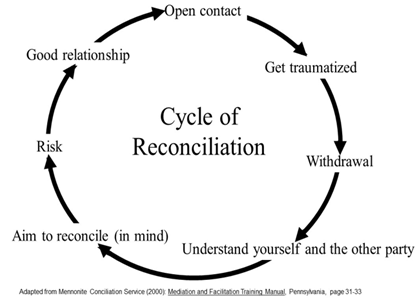
Figure 7
|
Figure 7 |
Figure 7: Reconciliation cycles frequently include a number of stages that aid in promoting mutual understanding and healing. A thorough explanation of this cycle is provided below, including emotional phases and stressing the value of keeping lines of communication open at all times.
9.4. Open contact
When resolving disputes, maintaining open communication is essential Madalina (2016), McGrane et al. (2005). It permits both sides to freely express their opinions, emotions, and life experiences Mohr and Spekman (1994). Effective communication provides a forum for expression and understanding, which is the cornerstone for resolving interpersonal conflicts Schoeny and Warfield (2000).
9.5. Get Traumatization
Conflict-causing situations are frequently traumatic, which has an impact on mental health Castro-Delgado et al. (2025), Lies et al. (2019). People may feel more anxious, angry, or depressed during this stage Spielberger and Reheiser (2009). "People can manage their emotional reactions during conflicts if they understand the impact of trauma on relationships Williamson et al. (2020)."
9.6. Withdrawal
People tend to isolate themselves in order to protect themselves after traumatic events Bunce et al. (1995), Cruwys et al. (2025). Avoidance and emotional detachment are hallmarks of this stage Bonanno (2004). "Withdrawal may serve as a temporary coping mechanism, but if prolonged, it can hinder the reconciliation process Büttner et al., (2024), Williams et al. (2017)."
9.7. Understand yourself and other party
Reflecting on one's own emotions and responses is crucial Dimaggio et al. (2008), Gerace et al. (2017). People are able to understand their own feelings and recognize triggers thanks to this process Ellis (1991), Lazarus (2006). An emphasizes that "self-awareness is a pivotal step toward empathy, enabling individuals to recognize their feelings in relation to others McNaughton (2016), Vago and Silbersweig (2012)."
9.8. Aiming to Reconcile
Both parties can start working toward reconciliation as soon as a mutual understanding has been achieved (Katona and Review, 2025; Walter, 2024). This stage entails addressing grievances, establishing healing intentions, and laying out a future strategy Colbach et al. (2018), Kuchel (2010). The goal of reconciliation shows commitment to restoring relationships, rather than simply resolving conflicts Velez and Idrobo (2024).
9.9. Risking Vulnerability
Both sides must be prepared to take chances in order to accomplish true reconciliation Jakimow (2020). This entails showing vulnerability and possibly putting oneself in danger of more harm Musto et al. (2021). Risk-taking is essential to establishing trust in relationships because it enables sincere reconnection Bandemer et al. (2025).
9.10. Building a Good Relationship
Building a strong and wholesome relationship going forward is the ultimate aim of the reconciliation cycle Madden (2019). Mutual respect, shared experiences, and constant communication are required for this Walsh (2003). Healthy relationships are built on trust, respect, and a willingness to engage in continuous dialogue Galway et al. (2022).
10. Methods ANd Materials
The strategies and resources employed in the review article are described in this section, with an emphasis on forgiveness, reconciliation, and conflict resolution, especially as seen through the prism of social psychology in relation to violent identity and group conflicts.
11. Research Design
The review collects and examines literature from the fields of social psychology, conflict resolution, and peacebuilding using a methodical process. Peer-reviewed books, articles, and pertinent case studies are prioritized in order to guarantee a comprehensive analysis of current theories and practices.
12. Results
The review article uses social psychology as a theoretical framework to highlight important findings about conflict resolution, forgiveness, and reconciliation processes in the Cambodian context Kidron (2021). The main findings from the examination of the body of current literature and case studies are listed below Jeffery (2015).
The Khmer Rouge regime's legacy from 1975 to 1979 continues to have a big impact on modern Cambodian culture Caswell (2010). The psychological wounds from this period still affect many Cambodians, making it difficult for them to participate in reconciliation efforts Caswell (2010), Gottesman (2003). Group identities have been molded by historical trauma, which has fueled cycles of mistrust and hostility between various social and ethnic groups Cunha et al. (2015), Taum (2005).
One of the most important aspects of the reconciliation process was forgiveness Kalayjian and Paloutzian (2009), Tint (2009). Even though many people say they want to forgive, trauma and resentment can make it difficult to do so Kohen (2009), Strabbing (2020). This emphasizes how important psychological support systems are to promoting both individual and group healing Mullet et al. (2021), Palanski et al. (2012).
Successful community-led projects show how effective localized approaches to reconciliation can be Mwonzora, (2025), Schismenos et al. (2022). Storytelling and personal experience-sharing programs have been shown to be effective in promoting empathy and removing barriers between opposing groups Quinney (2024). These programs, which encourage people to view themselves as belonging to a common community rather than being split by old grievances, frequently draw on the ideas of social identity theory Hobson and Payne (2022).
It has been demonstrated that having intergroup discussions helps to lessen prejudice and promote understanding among various ethnic groups Stephan and Finlay (1999). In order to resolve identity-based conflicts, these programs give participants the opportunity to talk about their hopes, fears, and viewpoints Smith and Postmes (2011). The Contact Hypothesis is supported by empirical data, which indicates that constructive interactions between various groups reduce prejudices and foster a sense of belonging Brannon and Lin, (2021), Hussain and Jones (2021).
Positive results have been obtained from incorporating psychological interventions into peacebuilding initiatives Hertog (2024). Techniques like restorative justice procedures and trauma-informed care aid in addressing underlying psychological problems associated with previous violence Frasco et al. (2024). The chances of peace are greatly increased when practical reconciliation techniques are combined with emotional support Kelman (1998).
The results highlight the necessity of funding educational initiatives that foster mutual respect and understanding between various groups Schwoebel (2017). Furthermore, establishing safe forums for discussion and building community resilience are essential measures in the pursuit of enduring peace John (2021).
These findings show that a social psychology approach can offer important perspectives on Cambodian reconciliation, forgiveness, and conflict resolution Clancy and Hamber (2008). In order to foster cohesive identities and long-lasting peace, community-based approaches that prioritize the psychological and emotional aspects of healing must be implemented Opacin and Čehajić-Clancy (2025).
13. Findings
The review article offers a number of important conclusions about the interrelated topics of forgiveness, reconciliation, and conflict resolution in Cambodia that are examined from the perspective of social psychology Kelman (1998), Levy (2014). Understanding and resolving the complexity of violent identity and group conflicts in the Cambodian context requires an awareness of these findings Gellman (2010), Levy (2014).
The Khmer Rouge regime's lasting effects are still evident in modern-day Cambodian society Croissant (2022), Szablewska (2022). Reconciliation efforts have been made more difficult by the widespread mistrust that this historical trauma has fostered among different ethnic groups Szablewska et al. (2019). Many people still struggle with unresolved loss and grief, which makes it difficult to forgive and make amends Szablewska et al. (2019).
It becomes clear that forgiveness is a complex process rather than a single objective Andrews (2000). The results show that although a lot of Cambodians want to forgive, this process is frequently hampered by emotional obstacles like betrayal and anger Hieronymi (2001). In order to move toward forgiveness, people must navigate these difficult emotions with the help of psychological interventions and community support Cavell, (2003), Satne (2016).
Reconciliation has been successfully promoted by neighborhood-based, community-driven projects Garbarino et al. (1998). Initiatives that use storytelling, group discussions, and reconciliation circles help people share their experiences and foster empathy and understanding Greenbaum (1982). These programs demonstrate how social identity theory can be effectively used to change group dynamics and advance a healing-focused collective identity Frehlich et al. (2023).
Prejudices and stereotypes between opposing groups are considerably diminished by structured intergroup interactions McCauley et al. (1980). Making personal connections through conversation at casual get-togethers and neighborhood events is essential for changing attitudes and promoting reconciliation Fedor and Sciences (2014). Positive interactions can result in greater acceptance and harmony, according to the Contact Hypothesis, which is supported by the findings Devine (1989).
Reconciliation frameworks that incorporate trauma-informed psychological approaches address past emotional scars Stroebe and Insko (1989). Building resilience and advancing lasting peace require interventions that emphasize both individual and group healing Brewer (1999). This method acknowledges that in addition to structural reconciliation efforts, psychological needs must be met Blum (2004), Filpisan et al. (2011).
Reconciliation efforts have made progress, but resistance is still common Tupper et al. (2022). Open communication is hampered by elements like socioeconomic disparities, political manipulation, and deeply ingrained cultural stigmas Williams and Jessee (2024). The results show that these systemic problems need to be addressed alongside personal healing processes in order for reconciliation to be successful Tupper et al. (2022).
Reconciliation is greatly aided by educational initiatives that promote empathy and understanding Robinson and Martin (2016). According to the findings, incorporating peace education into curricula can support a culture of peace and counter historical narratives of division. Schools are crucial venues for instilling values of cooperation and tolerance Truth and Reconciliation Commission of Canada (2015).
Finally, the results highlight the necessity of a multifaceted strategy that integrates political, psychological, and social tactics in peacebuilding Strupinskienė (2017). To achieve genuine and long-lasting reconciliation in Cambodia, it is imperative to concurrently address emotional, historical, and structural issues Pankhurst (1999).
The significance of social psychological frameworks in addressing violent identity conflicts is underscored by these findings, which outline the complex terrain of conflict resolution, forgiveness, and reconciliation in Cambodia Wotherspoon and Milne (2021). The revelations highlight the need for cooperative, neighborhood-based initiatives to support recovery and long-term peace in the area Watkins and Shulman (2015).
14. Ethical Considerations
To ensure sensitivity, respect, and integrity throughout the research process, a number of ethical considerations were crucial when conducting the review article on conflict resolution, forgiveness, and reconciliation in the context of Cambodia. These moral considerations highlight a dedication to carrying out responsible, respectful research that respects the lived experiences of people impacted by conflict. The review seeks to positively impact Cambodia's conversation on conflict resolution, forgiveness, and reconciliation by emphasizing cultural sensitivity, consent, dignity, and confidentiality.
15. Discussion
Cambodian society today is significantly shaped by the Khmer Rouge regime's lasting legacy De Walque (2006). The results demonstrate how the historical trauma that many people have endured makes the process of reconciliation more difficult Brounéus (2009). This is consistent with theories of collective memory, which posit that cycles of violence and mistrust can be sustained by past atrocities Meral (2012). Creating successful interventions that address the structural as well as emotional aspects of conflict requires an understanding of this historical context Shapiro (2010).
The review emphasizes how forgiveness is a complicated, continuous process that is impacted by social, psychological, and emotional factors rather than just being a final goal Brady et al. (2023). This viewpoint is consistent with Brady et al. (2023), Enright et al. (2016) research, which contends that forgiveness entails a number of stages that people go through at their own pace Lahiri and Padmakumari (2025). Therefore, support networks, such as neighborhood initiatives and mental health services, can be extremely helpful in easing this process Molinero et al. (2024). To help people reconcile their feelings with their desire for peace, it is essential to recognize that forgiveness does not mean endorsing past behavior Fincham (2022).
Initiatives for reconciliation led by the community have become essential to promoting healing and restoring confidence Freedman (2018). Drawing on the Contact Hypothesis, the results show that organized intergroup communication fosters empathy, lessens discrimination, and builds a common identity McCullough et al. (2013). Localized strategies that emphasize storytelling and common experiences enable people to relate to one another personally, which is essential for overcoming long-standing differences McCullough et al. (2013). This method emphasizes the value of fostering a sense of collective identity, which is also consistent with social identity theory McCullough et al. (2013), Ordóñez-Carabaño and Prieto-Ursúa (2025).
Addressing trauma requires integrating psychological frameworks into peacebuilding tactics Wade and Tittler (2021). The results affirm that emotional healing is a necessary condition for long-lasting peace and support the inclusion of trauma-informed care in efforts at reconciliation Staub (2006). In order to promote long-term stability, psychological interventions should not only focus on healing individuals but also on empowering communities through resilience building Hewstone et al. (2014).
Significant obstacles still exist in spite of the encouraging results, such as socioeconomic inequality and political factors that keep dividing people Hewstone et al. (2014). This emphasizes the need for a comprehensive strategy that takes into account communities' sociopolitical and psychological components Swart et al. (2011). To remove obstacles to peace, it is essential to make sure that grassroots initiatives are backed by more significant structural adjustments Park (2012).
The conclusions drawn from this review have broad ramifications for practitioners and policymakers working on peacebuilding in Cambodia Stathi et al. (2017). It is crucial to implement strategies that put an emphasis on education, intergroup contact, and trauma recovery Pincus (2024). The path to genuine reconciliation can be paved by funding community-based initiatives that foster communication, comprehension, and group healing Nguyen and Kenemore (2022).
16. Limitations
The social psychology-based review article on conflict resolution, forgiveness, and reconciliation in Cambodia offers insightful information, but it also has inherent drawbacks. In order to properly frame the results and direct future research, it is imperative to acknowledge these limitations.
Understanding these restrictions is crucial to placing the review's conclusions in the larger context of forgiveness, reconciliation, and conflict resolution. To fill these knowledge gaps and improve the efficacy of peacebuilding initiatives in Cambodia, future studies should incorporate a variety of approaches, local viewpoints, and changing cultural contexts.
17. Conclusion
The review paper on forgiveness, reconciliation, and conflict resolution in the Cambodian context emphasizes how social psychology, community dynamics, and historical trauma interact intricately to influence peacebuilding initiatives Pham et al. (2019). Drawing on a diverse body of literature, several key conclusions emerge that illuminate pathways toward sustainable reconciliation in a society deeply affected by its past Dicklitch and Malik (2010).
In Cambodia, social interactions and relationships are still influenced by the Khmer Rouge's legacy De Walque (2006). Developing successful reconciliation strategies requires an understanding of how this historical trauma affects current dynamics. This acknowledgement is in line with Kaiser et al. (2015) research, which highlights the importance of resolving past grievances in order to promote true forgiveness and healing Tint (2009), Worthington and Aten (2010).
It is emphasized that forgiveness is an essential step in reconciliation and that it takes time, emotional effort, and support from the community Bar-Tal (2009). The results confirm that forgiveness is a complicated, individual experience that calls for social and psychological support rather than a straightforward path Enright and Fitzgibbons (2015), Staub (2006). Fostering environments that promote forgiveness can greatly aid in both individual and group healing, as stated by Enright and Fitzgibbons (2015).
Initiatives led by the community are essential for fostering empathy and understanding between opposing groups Stephan and Finlay (1999). According to Leveraging the Contact Hypothesis, organized intergroup activities, like storytelling projects and dialogue sessions, can promote constructive relationships and change group identities White et al. (2015). Rebuilding trust and fostering social cohesion depend heavily on these neighborhood initiatives LaTendresse (2000).
Addressing the emotional and mental health needs of those impacted by conflict requires the integration of psychological frameworks into peacebuilding efforts Hertog and Psychology (2024). According to Bloom (2013), trauma-informed care and resilience-building techniques can support efforts at reconciliation, guaranteeing that emotional healing takes place concurrently with structural changes Clancy and Hamber (2008), Frasco et al. (2024). The results highlight the need for a multifaceted strategy that integrates political, social, and psychological tactics in peacebuilding Hertog and Psychology (2024). This review offers a thorough summary, but it also points out drawbacks, including the need for additional qualitative data and possible biases in the literature selection. Future studies that fill in these gaps will improve our knowledge of conflict resolution and offer a more profound understanding of people's real-life experiences in Cambodia.
In conclusion, the examination of forgiveness, reconciliation, and conflict resolution in the Cambodian context emphasizes the value of comprehending social and historical dynamics while encouraging psychological support and community involvement. In order to address the problems of violent identity conflicts in Cambodia, stakeholders can endeavor to create a more harmonious and cohesive society by utilizing social psychology insights and concentrating on locally relevant strategies.
CONFLICT OF INTERESTS
None.
ACKNOWLEDGMENTS
None.
REFERENCES
Abrams, D., and Hogg, M. A. (2001). Collective Identity: Group Membership and Self‐Conception. In M. A. Hogg and D. Abrams (Eds.), Intergroup Relations (pp. 425–460). Blackwell. https://doi.org/10.1002/9780470998458.ch18
Abu-Ras, W., Decker, E., Burghul, M., and Terrana, S. (2024). Psychological Responses to Political Hostility: Aggression, Bullying, and Well-Being In Qatar. International Journal of Qualitative Studies on Health and Well-Being, 19(1), Article 2359267. https://doi.org/10.1080/17482631.2024.2359267
Adler, D., Chhim, K., Heang, P., Hak, S., Sou, K., and Heng, K. (2006). Justice for the Poor? An Exploratory Study of Collective Grievances Over Land and Local Governance in Cambodia. Asian Development Bank. https://doi.org/10.2139/ssrn.983317
AhnAllen, J. M., Suyemoto, K. L., and Carter, A. S. (2006). Physical Appearance, Belonging, Exclusion, and Racial/Ethnic Self-Identification Among Multiracial Japanese European Americans. Cultural Diversity and Ethnic Minority Psychology, 12(4), 673–686. https://doi.org/10.1037/1099-9809.12.4.673
Aitken, R. (2007). Cementing Divisions? International Interventions and Ethnic Identities. Peace Review, 28(3), 247–267. https://doi.org/10.1080/01442870701437568
Ajodo-Adebanjoko, A. (2019). Political Economy and National Security Implications of Resource-Based Conflicts in Nigeria. African Security Review, 28(1), 56–71. https://doi.org/10.1080/10246029.2019.1655077
Akhtar, S., Dolan, A., and Barlow, J. (2017). State Forgiveness and Psychological Wellbeing: A Qualitative Study. Journal of Religion and Health, 56(2), 450–463. https://doi.org/10.1007/s10943-016-0188-9
Akintayo, J. (2025). Sulhu as Local Peacebuilding. Peacebuilding, 1–20. https://doi.org/10.1080/21647259.2025.2450574
Al-Dajani, I. M., and Leiner, M. (2022). Reconciliation, Heritage and Social Inclusion in the Middle East and North Africa. Springer. https://doi.org/10.1007/978-3-031-08713-4
Allen, K.-A., Kern, M. L., Rozek, C. S., McInerney, D. M., and Slavich, G. M. (2021). Belonging: Conceptual Issues and Integrative Framework. Australian Journal of Psychology, 73(1), 87–102. https://doi.org/10.1080/00049530.2021.1883409
Aloyo, E., Dancy, G., and Dutton, Y. (2023). Retributive or Reparative Justice? Journal of Peace Research, 60(2), 258–273. https://doi.org/10.1177/00223433211065573
Amer, R. (1999). Conflict Management and Constructive Engagement in ASEAN. Third World Quarterly, 20(5), 1031–1048. https://doi.org/10.1080/01436599913479
Amstutz, M. R. (2005). The Healing of Nations: The Promise and Limits of Political Forgiveness. Rowman and Littlefield. https://doi.org/10.5771/9781461644255
Andrews, M. (2000). Forgiveness in Context. Journal of Moral Education, 29(1), 75–86. https://doi.org/10.1080/030572400102943
Annan, K. (1998). Causes of Conflict and Promotion of Durable Peace in Africa. In Fragile Peace: Perspectives on Africa’s Security Problems (19–62). United Nations.
Atkinson, C. L. (2013). Administrative Evil and Belief in Khmer Rouge Cambodia. SAGE Open, 3(2). https://doi.org/10.1177/2158244013491951
Ayres, D. (1999). The Khmer Rouge and Education. History of Education, 28(2), 205–218. https://doi.org/10.1080/004676099284744
Bajaj, M., and Chiu, B. (2009). Education for Sustainable Development as Peace Education. Journal of Peace Education, 34(4), 441–455. https://doi.org/10.1111/j.1468-0130.2009.00593.x
Bandemer, S., Daßler, B., Rittberger, B., Weiss, M., and Will, K. (2025). Politics of De-Risking in EU Digital Infrastructures. Journal of European Public Policy, 1–29. https://doi.org/10.1080/13501763.2025.2545305
Bar-Tal, D. (2009). Reconciliation as a Foundation of Peace Culture. In Handbook on Building Cultures of Peace (363–377). Springer. https://doi.org/10.1007/978-0-387-09575-2_25
Baskin, T. W., and Enright, R. D. (2004). Forgiveness Interventions: A Meta-Analysis. Journal of Counseling and Development, 82(1), 79–90. https://doi.org/10.1002/j.1556-6678.2004.tb00288.x
Baumeister, R. F., and Scher, S. J. (1988). Self-Defeating Behavior Patterns. Psychological Bulletin, 104(1), 3–22. https://doi.org/10.1037/0033-2909.104.1.3
Becker, G., Beyene, Y., and Ken, P. (2000). Memory, Trauma, and Embodied Distress. Ethos, 28(3), 320–345. https://doi.org/10.1525/eth.2000.28.3.320
Beech, B. M., Ford, C., Thorpe, R. J., Bruce, M. A., and Norris, K. C. (2021). Poverty, Racism, and Public Health Crisis. Frontiers in Public Health, 9, Article 699049. https://doi.org/10.3389/fpubh.2021.699049
Bekerman, Z., and Maoz, I. (2005). Obstacles to Coexistence Education. Identity, 5(4), 341–357. https://doi.org/10.1207/s1532706xid0504_3
Bennett, C. J. (2018). Living with the Dead in Cambodia. Journal of Southeast Asian Studies, 49(2), 184–203. https://doi.org/10.1017/S0022463418000188
Bennett, C. J. (2024). Evidentiary Potential of art After Genocide. Death Studies, 1–12. https://doi.org/10.1080/07481187.2024.2424029
Bernath, J. (2016). Complex Political Victims after Mass Atrocity. International Journal of Transitional Justice, 10(1), 46–66. https://doi.org/10.1093/ijtj/ijv026
Bigabo, F., Biracyaza, E., Kanazayire, C., Kangabe, J., and Gishoma, D. (2025). Reconciliation Villages in Rwanda. Discover Social Science and Health, 5(1), 1–16. https://doi.org/10.1007/s44155-025-00201-9
Blum, L. (2004). Stereotypes and Stereotyping. Philosophical Papers, 33(3), 251–289. https://doi.org/10.1080/05568640409485143
Boehle, J. (2021). Forgiveness and Restorative Justice in Peacebuilding. Global Change, Peace and Security, 33(2), 103–123. https://doi.org/10.1080/14781158.2021.1910226
Bonanno, G. A. (2004). Loss, Trauma, and Human Resilience. American Psychologist, 59(1), 20–28. https://doi.org/10.1037/0003-066X.59.1.20
Clancy, M. A., and Hamber, B. (2008). Trauma, Peacebuilding and Development: An Overview of Key Positions and Critical Questions. Paper Presented at the Trauma, Peacebuilding and Development Conference, INCORE/IDRC, New Delhi, India.
Clark, D. A. (2013). Cognitive Restructuring. In The Wiley Handbook of Cognitive Behavioral Therapy (1–22). Wiley. https://doi.org/10.1002/9781118528563.wbcbt02
Clark, J. N. (2012). Reflections on Trust and Reconciliation: A Case Study of a Central Bosnian Village. International Journal of Human Rights, 16(2), 239–256. https://doi.org/10.1080/13642987.2010.528205
Colbach, N., Cordeau, S., Garrido, A., Granger, S., Laughlin, D., Ricci, B., and Mézière, D. (2018). Land Sharing Versus Land Sparing: How to Reconcile Crop Production and Biodiversity? A Simulation Study Focusing on Weed Impacts. Agriculture, Ecosystems and Environment, 251, 203–217. https://doi.org/10.1016/j.agee.2017.09.005
Coleman, P. T. (2003). Characteristics of Protracted, Intractable Conflict: Toward the Development of a Metaframework—Part I. Peace and Conflict: Journal of Peace Psychology, 9(1), 1–37. https://doi.org/10.1207/S15327949PAC0901_01
Cook, K. V., Sandage, S. J., Hill, P. C., and Strawn, B. D. (2009). Hermeneutic Analysis of Virtuous Exemplar Narratives of Cambodian American Buddhists and Christians. Mental Health, Religion and Culture, 12(4), 315–338. https://doi.org/10.1080/13674670902734563
Cordell, K., and Wolff, S. (2011). The Routledge Handbook of Ethnic Conflict. Routledge. https://doi.org/10.4324/9780203845493
Ćorkalo Biruški, D. (2017). Determinants of Post-Conflict Trust: The Role of Ethnic Identity, Personal and Collective Victimization, and Intergroup Emotions. In E. Halperin and K. Sharvit (Eds.), The role of trust in conflict resolution (pp. 59–80). Springer. https://doi.org/10.1007/978-3-319-43355-4_5
Creasy, K. J. (2025). Loneliness and Ressentiment. Journal of the American Philosophical Association, 1–19. https://doi.org/10.1017/apa.2025.9
Croissant, A. (2022). Cambodia: From UN-Led Peace-Building to Post-Genocidal Authoritarianism. In Comparative Politics of Southeast Asia (39–74). Springer. https://doi.org/10.1007/978-3-031-05114-2_3
Crowell, S. (2021). On what Matters: Personal Identity as a Phenomenological Problem. Continental Philosophy Review, 20(2), 261–279. https://doi.org/10.1007/s11097-020-09695-x
Cruwys, T., Macleod, E., Curll, S., Walker, I., Kurz, T., Western, K., and Greenaway, K. H. (2025). Is Trauma Isolating, or Does Isolation Traumatize? Psychological Trauma: Theory, Research, Practice, and Policy. https://doi.org/10.1037/tra0001895
Cummings, E. M., and Davies, P. T. (2002). Effects of Marital Conflict on Children. Journal of Child Psychology and Psychiatry, 43(1), 31–63. https://doi.org/10.1111/1469-7610.00003
Cunha, M. P. e., Rego, A., and Clegg, S. (2015). The Institutionalization of Genocidal Leadership: Pol Pot and a Cambodian Dystopia. Journal of Leadership Studies, 9(1), 6–18. https://doi.org/10.1002/jls.21346
Cunha, M. P. e., Rego, A., Silva, Á. F., and Clegg, S. (2015). An Institutional Palimpsest? The Case of Cambodia’s Political Order. Journal of Political Power, 8(3), 431–455. https://doi.org/10.1080/2158379X.2015.1099858
Davies, P. T., and Cummings, E. M. (1994). Marital Conflict and Child Adjustment. Psychological Bulletin, 116(3), 387–411. https://doi.org/10.1037/0033-2909.116.3.387
De Coning, C. (2016). From Peacebuilding to Sustaining Peace. Resilience, 4(3), 166–181. https://doi.org/10.1080/21693293.2016.1153773
De Walque, D. (2006). The Socio-Demographic Legacy of the Khmer Rouge Period. Population Studies, 60(2), 223–231. https://doi.org/10.1080/00324720600684767
Deblinger, E., Pollio, E., and Dorsey, S. (2016). Applying Trauma-Focused Cognitive Behavioral Therapy in Group Format. Child Maltreatment, 21(1), 59–73. https://doi.org/10.1177/1077559515620668
Delano, D. L., and Knottnerus, J. D. (2018). The Khmer Rouge, Ritual and Control. Asian Journal of Social Science, 46(1–2), 79–110. https://doi.org/10.1163/15685314-04601005
Devine, P. G. (1989). Stereotypes and Prejudice. Journal of Personality and Social Psychology, 56(1), 5–18. https://doi.org/10.1037/0022-3514.56.1.5
DeYoung, S. E., Lewis, D. C., Seponski, D. M., Augustine, D. A., and Phal, M. J. (2020). Disaster Preparedness and Well-Being Among Cambodian- and Laotian-Americans. Disaster Prevention and Management, 29(4), 425–443. https://doi.org/10.1108/DPM-01-2019-0034
Dicklitch, S., and Malik, A. (2010). Justice, Human Rights, and Reconciliation in Postconflict Cambodia. Human Rights Review, 11(4), 515–530. https://doi.org/10.1007/s12142-009-0153-z
Diepart, J.-C., and Dupuis, D. (2014). The Peasants in Turmoil. Journal of Peasant Studies, 41(4), 445–468. https://doi.org/10.1080/03066150.2014.919265
Dimaggio, G., Lysaker, P. H., Carcione, A., Nicolò, G., and Semerari, A. (2008). Self-Reflection and Mindreading. Consciousness and Cognition, 17(3), 778–789. https://doi.org/10.1016/j.concog.2008.02.005
DiPietro, S. M. (2019). Roads Diverged. Criminology, 57(1), 74–104. https://doi.org/10.1111/1745-9125.12196
Doz, Y. L. (1996). The Evolution of Cooperation in Strategic Alliances. Strategic Management Journal, 17(S1), 55–83. https://doi.org/10.1002/smj.4250171006
Drummond, J. (2021). Self-Identity and Personal Identity. Continental Philosophy Review, 20(2), 235–247. https://doi.org/10.1007/s11097-020-09696-w
Duckworth, M. P., and Iezzi, T. (2010). Physical Injuries, Pain, and Psychological Trauma. Psychological Injury and Law, 3(3), 241–253. https://doi.org/10.1007/s12207-010-9086-8
Ellis, C. (1991). Sociological Introspection and Emotional Experience. Symbolic Interaction, 14(1), 23–50. https://doi.org/10.1525/si.1991.14.1.23
Ellis, D. G. (2006). Transforming Conflict: Communication and Ethnopolitical Conflict. Rowman and Littlefield.
Emmons, R. A., and King, L. A. (1988). Conflict Among Personal Strivings. Journal of Personality and Social Psychology, 54(6), 1040–1048. https://doi.org/10.1037/0022-3514.54.6.1040
Enright, R. D., and Fitzgibbons, R. P. (2000). Helping Clients Forgive. American Psychological Association. https://doi.org/10.1037/10381-003
Enright, R. D., and Fitzgibbons, R. P. (2015). Forgiveness Therapy (2nd ed.). American Psychological Association. https://doi.org/10.1037/14526-013
Enright, R. D., Lee, Y.-R., Hirshberg, M. J., Litts, B. K., Schirmer, E. B., and Irwin, A. J. (2016). Examining Group Forgiveness. Peace and Conflict: Journal of Peace Psychology, 22(2), 153–170. https://doi.org/10.1037/pac0000153
Enyedy, N., Goldberg, J., and Welsh, K. M. (2006). Complex Dilemmas of Identity and Practice. Science Education, 90(1), 68–93. https://doi.org/10.1002/sce.20096
Everett, B. G. (2015). Sexual Orientation Identity Change and Depressive Symptoms. Journal of Health and Social Behavior, 56(1), 37–58. https://doi.org/10.1177/0022146514568349
Evrard, E., and Destrooper, T. (2025). Learning from the Past? International Journal of Human Rights, 29(5), 889–915. https://doi.org/10.1080/13642987.2024.2432946
Farouk, O. (2015). Globalization and its Impact on the Muslim Minority in Cambodia. In Southeast Asian Muslims in the Era of Globalization (145–171). Springer. https://doi.org/10.1057/9781137436818_8
Fedor, C.-G. J. P.-S., and Sciences, B. (2014). Stereotypes and Prejudice in the Perception of the “Other.” Procedia – Social and Behavioral Sciences, 149, 321–326. https://doi.org/10.1016/j.sbspro.2014.08.257
Fehr, R., and Gelfand, M. J. (2012). The Forgiving Organization: A Multilevel Model of Forgiveness at Work. Academy of Management Review, 37(4), 664–688. https://doi.org/10.5465/amr.2010.0497
Fehr, R., Gelfand, M. J., and Nag, M. (2010). The Road to Forgiveness: A Meta-Analytic Synthesis of its Situational and Dispositional Correlates. Psychological Bulletin, 136(5), 894–914. https://doi.org/10.1037/a0019993
Filpisan, M., Tomuletiu, A.-E., Moraru, A., Stoica, M., Gorea, B., and Solovastru, A. (2011). The Dynamic of Stereotypes and Prejudices in the Multicultural Environment. Procedia – Social and Behavioral Sciences, 15, 3263–3267. https://doi.org/10.1016/j.sbspro.2011.04.282
Fincham, F. D. (2022). Towards a Psychology of Divine Forgiveness. Psychology of Religion and Spirituality, 14(4), 451–461. https://doi.org/10.1037/rel0000323
Fincham, F. D., Beach, S. R. H., and Davila, J. (2004). Forgiveness and Conflict Resolution in Marriage. Journal of Family Psychology, 18(1), 72–81. https://doi.org/10.1037/0893-3200.18.1.72
Fisher, M. L., and Exline, J. J. (2010). Moving Toward Self-Forgiveness: Removing Barriers Related to Shame, Guilt, and Regret. Social and Personality Psychology Compass, 4(8), 548–558. https://doi.org/10.1111/j.1751-9004.2010.00276.x
Fisher, R. J. (1993). The Potential for Peacebuilding: Forging a Bridge from Peacekeeping to Peacemaking. Peace and Change, 18(3), 247–266. https://doi.org/10.1111/j.1468-0130.1993.tb00177.x
Floro, B. M. (2025). Restoring Inner Peace: Transformative Healing Through Psychological Reconciliation for Victims of Armed Conflict and Human Rights Violations. European Academic Journal of Management Research, 4(5), 2007–2018. https://doi.org/10.55927/eajmr.v4i5.134
Frasco, E., Sherr, L., and Burgess, R. A. (2024). Reconstructing Theory in Mental Health and Psychosocial Support and Peacebuilding: Towards an Integrated Model for Psychosocial Peacebuilding. Journal of Conflict Analysis and Psychology, 34(4), e2848. https://doi.org/10.1002/casp.2848
Freedman, S. J. (2018). Forgiveness as an Educational Goal With At-Risk Adolescents. Journal of Moral Education, 47(4), 415–431. https://doi.org/10.1080/03057240.2017.1399869
Frehlich, L., Amson, A., Doyle-Baker, P., Black, T., Boustead, D., Cameron, E., et al. (2023). Spread of Makoyoh’sokoi (Wolf Trail): A Community-Led, Physical Activity-Based, Holistic Wellness Program for Indigenous Women in Canada. International Journal for Equity in Health, 42(1), Article 80. https://doi.org/10.1186/s41043-023-00427-w
Frewer, T. (2014). Diversity and “Development”: The Challenges of Education in Cambodia. In Language, Education and Nation-Building: Assimilation and Shift in Southeast Asia (45–67). Springer. https://doi.org/10.1057/9781137455536_3
Fritsche, I., Jonas, E., and Kessler, T. (2011). Collective Reactions to Threat: Implications for Intergroup Conflict and for Solving Societal Crises. Social Issues and Policy Review, 5(1), 101–136. https://doi.org/10.1111/j.1751-2409.2011.01027.x
Gaertner, D. J. (2011). “The Climax of Reconciliation”: Transgression, Apology, Forgiveness and the Body in Conflict Resolution. Journal of Bioethical Inquiry, 8(3), 245–256. https://doi.org/10.1007/s11673-011-9317-z
Galinsky, A. D., Ku, G., and Wang, C. S. (2005). Perspective-Taking and Self–Other Overlap: Fostering Social Bonds and Facilitating Social Coordination. Group Processes and Intergroup Relations, 8(2), 109–124. https://doi.org/10.1177/1368430205051060
Galway, L. P., Esquega, E., and Jones-Casey, K. (2022). “Land is Everything, Land is us”: Exploring the Connections Between Climate Change, Land, and Health in Fort William First Nation. Social Science and Medicine, 294, 114700. https://doi.org/10.1016/j.socscimed.2022.114700
Garbarino, J., Kostelny, K., and Barry, F. (1998). Neighborhood-Based Programs. American Psychologist. https://doi.org/10.1037/10292-011
Gellman, M. J. (2010). World Views in Peace Building: A Post-Conflict Reconstruction Challenge in Cambodia. Development in Practice, 20(1), 85–98. https://doi.org/10.1080/09614520903436984
Gerace, A., Day, A., Casey, S., and Mohr, P. (2017). “I Think, you Think”: Understanding the Importance of Self-Reflection to the Taking of Another Person’s Perspective. Journal of Relationships Research, 8, e9. https://doi.org/10.1017/jrr.2017.8
Giguere, B., Lalonde, R., and Lou, E. (2010). Living at the Crossroads of Cultural Worlds: The Experience of Normative Conflicts by Second Generation Immigrant Youth. Social and Personality Psychology Compass, 4(1), 14–29. https://doi.org/10.1111/j.1751-9004.2009.00228.x
Goldstein, J. D., and Hiebert, M. S. (2016). Strange Legacies of the Terror: Hegel, the French Revolution, and the Khmer Rouge Purges. Theory and Event, 21(2), 145–167. https://doi.org/10.1080/10848770.2015.1129842
Gottesman, E. (2003). Cambodia after the Khmer Rouge: Inside the
Politics of Nation Building. Yale University Press.
Gray, T. (2014). Justice and Transition in Cambodia 1979–2014: Process, Meaning and Narrative (Doctoral dissertation, University of Westminster).
Green, P. (2009). Reconciliation and Forgiveness in Divided Societies: A Path of Courage, Compassion, and Commitment. In Forgiveness and Reconciliation: Psychological Pathways to Conflict Transformation and Peace Building (pp. 251–268). Springer. https://doi.org/10.1007/978-1-4419-0181-1_16
Greenbaum, S. D. (1982). Bridging Ties at the Neighborhood Level. Social Networks, 4(4), 367–384. https://doi.org/10.1016/0378-8733(82)90019-3
Halperin, E., and Pliskin, R. (2015). Emotions and Emotion Regulation in Intractable Conflict: Studying Emotional Processes within a Unique Context. Political Psychology, 36, 119–150. https://doi.org/10.1111/pops.12236
Hartmann, W. E., Wendt, D. C., Burrage, R. L., Pomerville, A., and Gone, J. P. (2019). American Indian Historical Trauma: Anticolonial Prescriptions for Healing, Resilience, and Survivance. American Psychologist, 74(1), 6–19. https://doi.org/10.1037/amp0000326
Havemann, K., and Pridmore, P. (2005). Social Cohesion: The Missing Link to Better Health and Nutrition in a Globalized World. New Frontiers of Social Policy: Development in a Global World, 12–15.
Haynes, J. (2009). Conflict, Conflict Resolution and Peace-Building: The Role of Religion in Mozambique, Nigeria and Cambodia. Commonwealth and Comparative Politics, 47(1), 52–75. https://doi.org/10.1080/14662040802659033
Hein, P. (2015). The Multiple Pathways to Trauma Recovery, Vindication, and National Reconciliation in Cambodia. Analyses of Social Issues and Public Policy, 7(2), 191–211. https://doi.org/10.1111/aspp.12185
Hertog, K. (2024). Integrating Mental Health and Psychosocial Support (MHPSS) and Peacebuilding: A Critical and Constructive Perspective from the Integrated Field of Psychosocial Peacebuilding. Journal of Peace Psychology. Advance online publication. https://doi.org/10.31124/advance.22512228.v1
Hewstone, M., Cairns, E., Voci, A., Hamberger, J., and Niens, U. (2006). Intergroup Contact, Forgiveness, and Experience of “The Troubles” in Northern Ireland. Journal of Social Issues, 62(1), 99–120. https://doi.org/10.1111/j.1540-4560.2006.00441.x
Hewstone, M., Lolliot, S., Swart, H., Myers, E., Voci, A., Al Ramiah, A., and Cairns, E. (2014). Intergroup Contact and Intergroup Conflict. Journal of Peace Psychology, 20(1), 39–53. https://doi.org/10.1037/a0035582
Hieronymi, P. (2001). Articulating an Uncompromising Forgiveness. Philosophy and Phenomenological Research, 62(3), 529–555. https://doi.org/10.1111/j.1933-1592.2001.tb00073.x
Hilhorst, M. (2005). “Prosthetic Fit”: On Personal Identity and the Value of Bodily Difference. Health Care Analysis, 7(3), 303–310. https://doi.org/10.1007/s11019-004-5528-y
Hinton, A. L. (1997). Cambodia’s Shadow: An Examination of the Cultural Origins of Genocide (Doctoral Dissertation). Emory University.
Hinton, A., and Lesley, E. (2025). Torque: Searching for Localization at the Khmer Rouge Tribunal. Global Studies Quarterly, 5(1), ksaf016. https://doi.org/10.1093/isagsq/ksaf016
Hinton, D. E., Nickerson, A., and Bryant, R. A. (2011). Worry, Worry Attacks, and PTSD Among Cambodian Refugees: A Path Analysis Investigation. Social Science and Medicine, 72(11), 1817–1825. https://doi.org/10.1016/j.socscimed.2011.03.045
Hirsch, M. (2019). The Role of International Tribunals in the Development of Historical Narratives. Journal of the History of International Law, 20(4), 391–428. https://doi.org/10.1163/15718050-12340092
Hirsch, P. (2016). The Shifting Regional Geopolitics of Mekong Dams. Political Geography, 51, 63–74. https://doi.org/10.1016/j.polgeo.2015.12.004
Hirsch, P., and Scurrah, N. (2015). The Political Economy of Land Governance in the Mekong Region: Contexts of Policy Advocacy. Proceedings of the International Academic Conference on Land Grabbing, Conflict and Agrarian-Environmental Transformations, Chiang Mai University, Thailand.
Hobson, J., and Payne, B. (2022). Building Restorative Justice Services: Considerations on Top-Down and Bottom-Up Approaches. International Journal of Law, Crime and Justice, 71, 100555. https://doi.org/10.1016/j.ijlcj.2022.100555
Hoefinger, H. (2011). “Professional Girlfriends”: An Ethnography of Sexuality, Solidarity and Subculture in Cambodia. Cultural Studies, 25(2), 244–266. https://doi.org/10.1080/09502386.2011.535990
Hoefinger, H. (2014). Gendered Motivations, Sociocultural Constraints, and Psychobehavioral Consequences of Transnational Partnerships in Cambodia. Studies in Gender and Sexuality, 15(1), 54–72. https://doi.org/10.1080/15240657.2014.877732
Hope, D. A., Burns, J. A., Hayes, S. A., Herbert, J. D., and Warner, M. D. (2010). Automatic Thoughts and Cognitive Restructuring in Cognitive Behavioral Group Therapy for Social Anxiety Disorder. Cognitive Therapy and Research, 34(1), 1–12. https://doi.org/10.1007/s10608-007-9147-9
Hossain, M. I. (2024). Global Citizens, Civic Responsibility, and Intercultural Communication in a Rapidly Globalising Multicultural World: Community Revitalisation and Reflective Practise. Education, Citizenship and Social Justice, 23(5), 487–514. https://doi.org/10.1080/17449057.2023.2216982
Hsu, E., Davies, C. A., and Hansen, D. J. (2004). Understanding Mental Health Needs of Southeast Asian Refugees: Historical, Cultural, and Contextual Challenges. Clinical Psychology Review, 24(2), 193–213. https://doi.org/10.1016/j.cpr.2003.10.003
Hughes, C. (2001). An Investigation of Conflict Management in Cambodian Villages. University of Cambridge, Centre for Development Research.
Husky, M. M., Fernandez, V. A., Tapia, G., Oprescu, F., Navarro-Mateu, F., and Kovess-Masfety, V. (2020). Mental Disorders and Medical Conditions Associated with Causing Injury or Death: A Population-Based Study. Psychiatry Research, 287, 112899. https://doi.org/10.1016/j.psychres.2020.112899
Hussain, M., and Jones, J. M. (2021). Discrimination, Diversity, and Sense of Belonging: Experiences of Students of Color. Journal of Diversity in Higher Education, 14(1), 63–75. https://doi.org/10.1037/dhe0000117
Ide, T., Bruch, C., Carius, A., Conca, K., Dabelko, G. D., Matthew, R., and Weinthal, E. (2021). The Past and Future(s) of Environmental Peacebuilding. International Affairs, 97(1), 1–16. https://doi.org/10.1093/ia/iiaa177
Jeffery, R. J. (2015). The Forgiveness Dilemma: Emotions and Justice at the Khmer Rouge Tribunal. Journal of International Affairs, 69(1), 35–52. https://doi.org/10.1080/10357718.2014.939140
Johansen, J. D., and Varvin, S. (2020). Negotiating Identity at the Intersection of Family Legacy and Present Time Life Conditions: A Qualitative Exploration of Central Issues Connected to Identity and Belonging in the Lives of Children of Refugees. Journal of Adolescence, 80, 1–9. https://doi.org/10.1016/j.adolescence.2020.01.016
John, V. M. (2021). Supporting Trauma Recovery, Healing, and Peacebuilding with the Alternatives to Violence Project. Peace and Conflict: Journal of Peace Psychology, 27(2), 182–189. https://doi.org/10.1037/pac0000532
Johnson, D. W., Johnson, R. T., and Tjosvold, D. (2012). Effective Cooperation: The Foundation of Sustainable Peace. In Psychological components of sustainable peace (15–53). Springer. https://doi.org/10.1007/978-1-4614-3555-6_2
Joma, A., and Lekan, M. P. (2024). Trauma-Informed Approach and Victim/Survivor Protection Protocol for Human Rights Stakeholders in Yemen. [Report].
Kaiser, B. N., Haroz, E. E., Kohrt, B. A., Bolton, P. A., Bass, J. K., and Hinton, D. E. (2015). “Thinking too Much”: A Systematic Review of a Common Idiom of Distress. Social Science and Medicine, 147, 170–183. https://doi.org/10.1016/j.socscimed.2015.10.044
Kalayjian, A., and Paloutzian, R. F. (2009). Forgiveness and Reconciliation. Springer. https://doi.org/10.1007/978-1-4419-0181-1
Kane, G., Killean, R., and Tann, B. (2024). Vernacularising Human Dignity in Human Rights Education: A Cambodian Case Study. International Journal of Human Rights, 28(10), 1615–1639. https://doi.org/10.1080/13642987.2024.2357142
Karremans, J. C., and Van Lange, P. A. M. (2008). Forgiveness in Personal Relationships: Its Malleability and Powerful Consequences. European Review of Social Psychology, 19(1), 202–241. https://doi.org/10.1080/10463280802402609
Katona, K. (2025). Is it possible to Reconcile the Economic and Social Objectives of Companies? A Critical Perspective. Society and Business Review, 20(1), 1–16. https://doi.org/10.1108/SBR-08-2023-0251
Kelman, H. C. (1998). Social-Psychological Contributions to Peacemaking and Peacebuilding in the Middle East. Journal of Social Issues, 47(1), 5–28. https://doi.org/10.1080/026999498378042
Khayyer, Z., Oreyzi, H., Asgari, K., and Sikström, S. (2019). Self-Perception and Interpersonal Peacefulness: The Mediating Role of Theory of Mind and Harmony. Journal of Aggression, Conflict and Peace Research, 11(3), 180–199. https://doi.org/10.1108/JACPR-10-2018-0383
Kidron, C. A. (2021). “Rebirthing” the Violent Past: Friction Between Post-Conflict Axioms of Remembrance and Cambodian Buddhist Forgetting. Anthropological Forum. https://doi.org/10.1080/00664677.2021.1971512
Kiernan, B. (2002). Introduction: Conflict in Cambodia, 1945–2002. Critical Asian Studies, 34(4), 483–495. https://doi.org/10.1080/1467271022000035893
Kiernan, B. (2021). The Pol Pot Regime’s Simultaneous War Against Vietnam and Genocide of Cambodia’s Ethnic Vietnamese Minority. Critical Asian Studies, 53(3), 342–358. https://doi.org/10.1080/14672715.2021.1902362
Kiernan, B. (2025). Three Murders in a Million: The Killings that Launched Pol Pot’s Rise, Silenced his Regime’s Leading Dissident, and Marked its End. Critical Asian Studies, 57(2), 163–191. https://doi.org/10.1080/14672715.2025.2488968
King, L. A., and Emmons, R. A. (1990). Conflict Over Emotional Expression: Psychological and Physical Correlates. Journal of Personality and Social Psychology, 58(5), 864–877. https://doi.org/10.1037/0022-3514.58.5.864
King, L. A., and Emmons, R. A. (1991). Psychological, Physical, and Interpersonal Correlates of Emotional Expressiveness, Conflict, and Control. European Journal of Personality, 5(2), 131–150. https://doi.org/10.1002/per.2410050206
Kissi, E. (2004). Rwanda, Ethiopia and Cambodia: Links, Faultlines and Complexities in a Comparative Study of Genocide. Journal of Genocide Research, 6(1), 115–133. https://doi.org/10.1080/1462352042000194746
Knippenberg, A. van, and Ellemers, N. (1990). Social Identity and Intergroup Differentiation Processes. European Review of Social Psychology, 1(1), 137–169. https://doi.org/10.1080/14792779108401860
Kogure, K., and Takasaki, Y. (2024). Conflict, Institutions, and Economic Behavior: Legacies of the Cambodian Genocide. Journal of Economic Behavior and Organization, 228, 106790. https://doi.org/10.1016/j.jebo.2024.106790
Kohen, A. (2009). The Personal and the Political: Forgiveness and Reconciliation in Restorative Justice. Critical Review of International Social and Political Philosophy, 12(3), 399–423. https://doi.org/10.1080/13698230903127911
Kolubinski, D. C., Nikčević, A. V., Lawrence, J. A., and Spada, M. M. (2016). The Role of Metacognition in Self-Critical Rumination. Journal of Rational-Emotive and Cognitive-Behavior Therapy, 34(1), 73–85. https://doi.org/10.1007/s10942-015-0230-y
Koyama, T. (2025). Who Restarts Violent Conflict? Post-Conflict Government Policy and Two Types of Conflict Recurrence. Defense and Peace Economics, 36(2), 200–226. https://doi.org/10.1080/10242694.2024.2308473
Krause, N. (1991). Stress and Isolation from Close Ties in Later Life. Journal of Gerontology, 46(4), S183–S194. https://doi.org/10.1093/geronj/46.4.S183
Kubota, Y. (2013). Armed Groups in the Cambodian Civil War: Rivalry and Recruitment. Palgrave Macmillan. https://doi.org/10.1057/9781137364098
Kuchel, P. W. (2010). Models of the Human Metabolic Network: Aiming to Reconcile Metabolomics and Genomics. Genome Medicine, 2(7), Article 46. https://doi.org/10.1186/gm167
Kyprianides, A., and Taylor, E. (2024). From Trauma to Trust: The Case for Integrating Reconciliation Practices. The Political Quarterly, 95(3), 498–506. https://doi.org/10.1111/1467-923X.13435
Lahiri, A., and Padmakumari, P. (2025). Beyond Apologies: A Systematic Review of Forgiveness in Different Relationship Contexts. Current Psychology, 1–18. https://doi.org/10.1007/s12144-025-08246-4
Lasky, S. (2005). A Sociocultural Approach to Understanding Teacher Identity, Agency and Professional Vulnerability in a Context of Secondary School Reform. Teaching and Teacher Education, 21(8), 899–916. https://doi.org/10.1016/j.tate.2005.06.003
LaTendresse, D. J. (2000). Social Identity and Intergroup Relations within the Hospital. Journal of Social Distress and the Homeless, 9(1), 51–69. https://doi.org/10.1023/A:1009410630749
Lazarus, R. S. (2006). Emotions and Interpersonal Relationships: Toward a Person-Centered Conceptualization of Emotions and Coping. Journal of Personality, 74(1), 9–46. https://doi.org/10.1111/j.1467-6494.2005.00368.x
Leaning, J., and Arie, S. (2000). Human Security: A Framework for Assessment in Conflict and Transition. U.S. Agency for International Development, Office of Sustainable Development.
Lee, S. (2021). Understanding Everyday Peace in Cambodia: Plurality, Subtlety, and Connectivity. Journal of Peacebuilding and Development, 16(1), 24–38. https://doi.org/10.1177/1542316620974371
Lee, S. (2022). Everyday Reconciliation in Post-Khmer Rouge Cambodia. Springer. https://doi.org/10.1007/978-3-031-13987-1
Levy, N. (2014). International Peacebuilding and the Politics of Identity: Lessons from Social Psychology using the Bosnian Case. Journal of Intervention and Statebuilding, 8(1), 68–90. https://doi.org/10.1080/17502977.2014.877633
Lewis, J. A., Williams, M. G., Peppers, E. J., and Gadson, C. A. (2017). Applying Intersectionality to Explore the Relations Between Gendered Racism and Health Among Black Women. Journal of Counseling Psychology, 64(5), 475–486. https://doi.org/10.1037/cou0000231
Li, J., Chen, L., Long, Y., Wang, J., and Li, X. (2025). Trust Rebuilding Through Village Co-Construction. Journal of Rural Studies, 113, Article 103474. https://doi.org/10.1016/j.jrurstud.2024.103474
Lies, J., Mellor, A., Jobson, L., and Drummond, S. P. A. (2019). Prevalence of Sleep Disturbance and its Relationships with Mental Health and Psychosocial Issues in Refugees and Asylum Seekers Attending Psychological Services in Australia. Sleep Health, 5(4), 335–343. https://doi.org/10.1016/j.sleh.2019.06.002
Lim, A. C.-H. (2016). Ethnic Identities in Cambodia. In A. C. Hughes and K. Un (Eds.), The Handbook of Contemporary Cambodia (379–387). Routledge.
Lohrmann, R. (2000). Migrants, Refugees and Insecurity: Current Threats to Peace? International Migration, 38(4), 3–22. https://doi.org/10.1111/1468-2435.00118
Lytle, A. (2018). Intergroup Contact Theory: Recent Developments and Future Directions. In L. Newman and S. V. D. Linden (Eds.), Intergroup relations ( 3–23). Springer. https://doi.org/10.1007/s11211-018-0314-9
Lyubomirsky, S., and Nolen-Hoeksema, S. (1995). Effects of Self-Focused Rumination on Negative Thinking and Interpersonal Problem Solving. Journal of Personality and Social Psychology, 69(1), 176–190. https://doi.org/10.1037/0022-3514.69.1.176
Madalina, O. (2016). Conflict Management, a New Challenge. Procedia Economics and Finance, 39, 807–814. https://doi.org/10.1016/S2212-5671(16)30255-6
Madden, B. (2019). A De/Colonizing Theory of Truth and Reconciliation Education. Curriculum Inquiry, 49(3), 284–312. https://doi.org/10.1080/03626784.2019.1624478
Mahar, A. L., Cobigo, V., and Stuart, H. (2013). Conceptualizing Belonging. Disability and Rehabilitation, 35(12), 1026–1032. https://doi.org/10.3109/09638288.2012.717584
Manning, P., Duong, K., and Kilburn, D. (2019). Faith in Forgiveness? Exploring Conversions to Christianity within a Former Khmer Rouge Community. Critical Asian Studies, 51(1), 51–74. https://doi.org/10.1080/14672715.2018.1539915
Massey, S. D. (2009). Forgiveness and Reconciliation: Essential to Sustaining Human Development. In E. L. Worthington Jr. (Ed.), Forgiveness and Reconciliation: Psychological Pathways to Conflict Transformation and Peace Building ( 83–96). Springer. https://doi.org/10.1007/978-1-4419-0181-1_6
McCauley, C., Stitt, C. L., and Segal, M. (1980). Stereotyping: From Prejudice to Prediction. Psychological Bulletin, 87(1), 195–208. https://doi.org/10.1037/0033-2909.87.1.195
McClure, J. P., and Brown, J. M. (2008). Belonging at Work. Human Resource Development International, 11(1), 3–17. https://doi.org/10.1080/13678860701782261
McCravy, S. T. (2017). A Critical Inquiry into the Nature and Promise of Peace Education in Cambodia (Doctoral dissertation).
McCullough, M. E. (2001). Forgiveness: Who Does it and How do They do it? Current Directions in Psychological Science, 10(6), 194–197. https://doi.org/10.1111/1467-8721.00147
McCullough, M. E., and Witvliet, C. V. O. (2002). The Psychology of Forgiveness. In C. R. Snyder and S. J. Lopez (Eds.), Handbook of Positive Psychology (446–455). Oxford University Press. https://doi.org/10.1093/oso/9780195135336.003.0032
McCullough, M. E., Kurzban, R., and Tabak, B. A. (2013). Cognitive Systems for Revenge and Forgiveness. Behavioral and Brain Sciences, 36(1), 1–15. https://doi.org/10.1017/S0140525X11002160
McGrew, L. (2011). Reconciliation in Cambodia: Victims and Perpetrators Living Together, Apart (Master’s thesis). Coventry University.
McNaughton, S. M. (2016). Developing Pre-Requisites for Empathy: Increasing Awareness of Self, the Body and the Perspectives of Others. Teaching in Higher Education, 21(5), 501–515. https://doi.org/10.1080/13562517.2016.1160218
Meijers, F. (1998). The Development of a Career Identity. International Journal for the Advancement of Counselling, 20(3), 191–207. https://doi.org/10.1023/A:1005399417256
Meisenberg, S. M., and Stegmiller, I. (2016). The Extraordinary Chambers in the Courts of Cambodia. Springer. https://doi.org/10.1007/978-94-6265-105-0
Nafari, J., and Ruebottom, T. (2025). A Trauma-Informed Approach: Temporal Reorientation, Identity Reconstruction, and Preventing Retraumatization in Refugee Entrepreneurship Support. International Small Business Journal. Advance online publication. https://doi.org/10.1177/02662426251320321
Nagda, B. A. (2006). Breaking Barriers, Crossing Borders, Building Bridges: Communication Processes in Intergroup Dialogues. Journal of Social Issues, 62(3), 553–576. https://doi.org/10.1111/j.1540-4560.2006.00473.x
Navidian, A., and Bahari, F. (2014). The Impact of Mixed, Hope- and Forgiveness-Focused Marital Counselling on Interpersonal Cognitive Distortions of Couples Filing for Divorce. Journal of Psychiatric and Mental Health Nursing, 21(7), 658–666. https://doi.org/10.1111/jpm.12058
Ngoun, K. (2016). Narrating the National Border: Cambodian State Rhetoric Versus Popular Discourse on the Preah Vihear Conflict. Journal of Southeast Asian Studies, 47(2), 210–233. https://doi.org/10.1017/S0022463416000059
Nguyen, H. T. K., and Kenemore, T. K. (2022). Forgiveness Experiences of Women and Men in Catholic Religious Orders. Journal of Religion and Spirituality in Social Work: Social Thought, 41(2), 123–142. https://doi.org/10.1080/15426432.2021.1977761
Nicholson, C., and Howarth, C. (2018). Imagining Collective Identities Beyond Intergroup Conflict. In C. Howarth and E. Andreouli (Eds.), Imagining Collective Futures: Perspectives from Social, Cultural and Political Psychology (173–196). Springer. https://doi.org/10.1007/978-3-319-76051-3_9
Nilsson, J. E., Marszalek, J. M., Linnemeyer, R. M., Bahner, A. D., and Misialek, L. H. (2011). Development and Assessment of the Social Issues Advocacy Scale. Educational and Psychological Measurement, 71(1), 258–275. https://doi.org/10.1177/0013164410391581
North, J. (1987). Wrongdoing and Forgiveness. Philosophy, 62(242), 499–508. https://doi.org/10.1017/S003181910003905X
Nou, L. (2024). Violence and Traumatic Stress Among Cambodian Survivors and Perpetrators of the Khmer Rouge Genocide. SSM – Mental Health, 6, Article 100341. https://doi.org/10.1016/j.ssmmh.2024.100341
O’Shaughnessy, R. J. (1967). Forgiveness. Philosophy, 42(162), 336–352. https://doi.org/10.1017/S0031819100001522
Opacin, N., and Čehajić-Clancy, S. (2025). The Potential of Peacebuilding Education Interventions in Societies Facing the Risk of Extreme Ideological Shifts. International Journal of Educational Development, 113, 103208. https://doi.org/10.1016/j.ijedudev.2025.103208
Ordóñez-Carabaño, Á., and Prieto-Ursúa, M. (2025). The Role of Forgiveness in Refugee Well-Being: A Systematic Review. European Psychologist. Advance Online Publication. https://doi.org/10.1027/1016-9040/a000564
Pain, R. (2014). Seismologies of Emotion: Fear and Activism During Domestic Violence. Social and Cultural Geography, 15(2), 127–150. https://doi.org/10.1080/14649365.2013.862846
Palanski, M. E. (2012). Forgiveness and Reconciliation in the Workplace: A Multi-Level Perspective and Research Agenda. Journal of Business Ethics, 109(3), 275–287. https://doi.org/10.1007/s10551-011-1125-1
Paloutzian, R. F., and Sagir, Z. (2019). Forgiving, Reconciling, and Peace-Building in Refugee Contexts: Theory, Research, and Data from the War in Syria. In D. J. Christie (Ed.), The Psychology of Peace Promotion: Global Perspectives on Personal Peace, Children and Adolescents, and social justice (181–200). Springer. https://doi.org/10.1007/978-3-030-14943-7_12
Pankhurst, D. (1999). Issues of Justice and Reconciliation in Complex Political Emergencies: Conceptualising Reconciliation, Justice, and Peace. Third World Quarterly, 20(1), 239–255. https://doi.org/10.1080/01436599914027
Park, S.-Y. (2012). Mediated Intergroup Contact: Concept Explication, Synthesis, and Application. Mass Communication and Society, 15(1), 136–159. https://doi.org/10.1080/15205436.2011.558804
Parker, C. (2015). Peacebuilding, Citizenship, and Identity. Springer. https://doi.org/10.1007/978-94-6300-247-9
Pedersen, D. (2002). Political Violence, Ethnic Conflict, and Contemporary Wars: Broad Implications for Health and Social Well-Being. Social Science and Medicine, 55(2), 175–190. https://doi.org/10.1016/S0277-9536(01)00261-1
Pérez de las Heras, B. (2020). Climate Security in the European Union’s Foreign Policy: Addressing the Responsibility to Prepare for Conflict Prevention. Journal of Contemporary European Studies, 28(3), 335–347. https://doi.org/10.1080/14782804.2020.1731438
Pettigrew, T. F., Tropp, L. R., Wagner, U., and Christ, O. (2011). Recent Advances in Intergroup Contact Theory. International Journal of Intercultural Relations, 35(3), 271–280. https://doi.org/10.1016/j.ijintrel.2011.03.001
Pham, P. N., Balthazard, M., Gibbons, N., and Vinck, P. (2019). Perspectives on Memory, Forgiveness, and Reconciliation in Cambodia’s Post–Khmer Rouge Society. International Review of the Red Cross, 101(910), 125–149. https://doi.org/10.1017/S1816383119000213
Phan, B., Borei, F. P., Sat, F. S., and Breng, T. (n.d.). Walking on the Peace Path with God’s Peace Vision “shalom” (Hebrew: שָׁלוֹם, šālōm) [Theological review article].
Phan, B., Harth, B., and Sor, R. (2025). Exploring the Impact of Teaching Self-Efficacy on Instructional Behaviors and Student Motivation in High School Mathematics: A Structural Equation Modeling Approach. Journal of Education, Learning, and Management, 2(1), 196–211. https://doi.org/10.69739/jelm.v2i1.571
Phan, B., Long, R., Heng, L., and Breng, T. (2025). Logistic Service Quality Innovation: Unlocking Competitive Advantage in Supply Chain Management. Journal of Education, Business, and Commerce, 2(1), 245–261. https://doi.org/10.69739/jebc.v2i1.667
Phillips, W. J., and Hine, D. W. (2016). En Route to Depression: Self-Esteem Discrepancies and Habitual Rumination. Journal of Personality, 84(1), 79–90. https://doi.org/10.1111/jopy.12141
Pina e Cunha, M., Rego, A., and Clegg, S. R. (2010). Obedience and Evil: From Milgram and Kampuchea to Normal Organizations. Journal of Business Ethics, 97(2), 291–309. https://doi.org/10.1007/s10551-010-0510-5
Pina e Cunha, M., Rego, A., and Clegg, S. R. (2011). Pol Pot, Alias Brother Number One: Leaders as Instruments of History. Management and Organizational History, 6(3), 268–286. https://doi.org/10.1177/1744935911406174
Pincus, J. D. (2024). Values as Motives: Implications for Theory, Methods, and Practice. Integrative Psychological and Behavioral Science, 58(4), 1704–1750. https://doi.org/10.1007/s12124-024-09817-z
Poku, N. K., Renwick, N., and Porto, J. G. (2007). Human Security and Development in Africa. International Affairs, 83(6), 1155–1170. https://doi.org/10.1111/j.1468-2346.2007.00679.x
Putra, I. E., Rufaedah, A., Thontowi, H. B., Pohlman, A., and Louis, W. (2024). A Theoretical Model of Victimization, Perpetration, and Denial in Mass Atrocities: Case Studies from Indonesia, Cambodia, East Timor, and Myanmar. Psychological Review, 28(4), 398–426. https://doi.org/10.1177/10888683241239097
Rabinovich, A., and Morton, T. A. (2016). Coping with Identity Conflict: Perceptions of Self as Flexible Versus Fixed Moderate the Effect of Identity Conflict on Well-Being. Self and Identity, 15(2), 224–244. https://doi.org/10.1080/15298868.2015.1117524
Rakower, M. C. (2004). The Khmer Rouge: An Analysis of One of the World’s Most Brutal Regimes. World Conflict and Social Science Review, 2004, 205–236.
Raleigh, C. (2011). The Search for Safety: The Effects of Conflict, Poverty, and Ecological Influences on Migration in the Developing World. Global Environmental Change, 21, S82–S93. https://doi.org/10.1016/j.gloenvcha.2011.08.008
Rasheed, R. A., and Munoz, A. (2016). Higher Education and Peacebuilding: A Bridge Between Communities? Journal of Peace Education, 13(2), 172–185. https://doi.org/10.1080/17400201.2016.1205003
Ricciardi, E., Rota, G., Sani, L., Gentili, C., Gaglianese, A., Guazzelli, M., and Pietrini, P. (2013). How the Brain Heals Emotional Wounds: The Functional Neuroanatomy of Forgiveness. Frontiers in Human Neuroscience, 7, Article 839. https://doi.org/10.3389/fnhum.2013.00839
Rigby, A. (2012). How do Post-Conflict Societies Deal with a Traumatic Past and Promote National Unity and Reconciliation? In A. Rigby (Ed.), Peace Studies: A Critical Reader (234–246). Routledge.
Robina-Ramírez, R., Sánchez, M. S.-O., Jiménez-Naranjo, H. V., and Castro-Serrano, J. (2022). Tourism Governance During the COVID-19 Pandemic Crisis: A Proposal for a Sustainable Model to Restore the Tourism Industry. Environment, Development and Sustainability, 24(5), 6391–6412. https://doi.org/10.1007/s10668-021-01707-3
Robinson, D., and Martin, K. (2016). Arts of Engagement: Taking Aesthetic Action in and Beyond the Truth and Reconciliation Commission of Canada. Wilfrid Laurier University Press. https://doi.org/10.51644/9781771121705
Roelofs, P. (2020). Contesting Localisation in Interfaith Peacebuilding in Northern Nigeria. Oxford Development Studies, 48(4), 373–386. https://doi.org/10.1080/13600818.2020.1787366
Ron, Y., and Maoz, I. (2013). Peacemaking Through Dialogue? Effects of Intergroup Dialogue on Perceptions Regarding the Resolution of the Israeli–Palestinian Conflict. Dynamics of Asymmetric Conflict, 6(1–3), 75–89. https://doi.org/10.1080/17467586.2013.861918
Ross, M. H. (2000). Creating the Conditions for Peacemaking: Theories of Practice in Ethnic Conflict Resolution. Ethnic and Racial Studies, 23(6), 1002–1034. https://doi.org/10.1080/014198700750018397
Roth, H. (2016). Pseudotransformational Leadership, Leadership Styles, and Emotional Intelligence: A Comparative Case Study of Lon Nol and Pol Pot (Unpublished doctoral dissertation or master’s thesis).
Rothman, J., and Olson, M. L. (2001). From Interests to Identities: Towards a New Emphasis in Interactive Conflict Resolution. Journal of Peace Research, 38(3), 289–305. https://doi.org/10.1177/0022343301038003002
Rothman, J., and Olson, M. L. (2001). From Interests to Identities: Toward a New Emphasis in Interactive Conflict Resolution. Journal of Peace Research, 38(3), 289–305. https://doi.org/10.1177/0022343301038003002
Roy, V. (2018). Natural Resource Production and the Risk of Conflict Recurrence. Studies in Conflict and Terrorism, 41(1), 1–23. https://doi.org/10.1080/1057610X.2016.1266896
Roy, V. (2018). Natural Resource Production and the Risk of Conflict Recurrence. Studies in Conflict and Terrorism, 41(1), 1–23. https://doi.org/10.1080/1057610X.2016.126689
Saltzman, W. R., Pynoos, R. S., Lester, P., Layne, C. M., and Beardslee, W. R. (2013). Enhancing Family Resilience Through Family Narrative Co-Construction. Clinical Child and Family Psychology Review, 16(3), 294–310. https://doi.org/10.1007/s10567-013-0142-2
Samuels, K. (2005). Sustainability and Peace Building: A Key Challenge. Development in Practice, 15(6), 728–736. https://doi.org/10.1080/09614520500296278
Sanders, D., Perry, J., and Saundry, R. (2025). Rebuilding Employment Relationships. In Collective Employment Relations: A Strategic Guide ( 199–216). Springer. https://doi.org/10.1007/978-3-031-65471-8_10
Satne, P. (2016). Forgiveness and Moral Development. Philosophical Psychology, 44(4), 1029–1055. https://doi.org/10.1007/s11406-016-9727-6
Schachter, E. P., and Rich, Y. (2011). Identity Education: A Conceptual Framework for Educational Researchers and Practitioners. Educational Psychologist, 46(4), 222–238. https://doi.org/10.1080/00461520.2011.614509
Schechtman, M. (2005). Personal Identity and the Past. Psychiatry, Psychology and Law, 12(1), 9–22. https://doi.org/10.1353/ppp.2005.0032
Scheffer, D. (2008). The Extraordinary Chambers in the Courts of Cambodia. International Criminal Law Review, 3, 219–256.
Schismenos, S., Stevens, G. J., Emmanouloudis, D., Georgeou, N., Shrestha, S., and Katopodes, N. (2022). Using Off-Grid Hydropower for Community-Led Flood Resilience: An Integrated Systems Approach. International Journal of Sustainable Energy, 41(6), 594–608. https://doi.org/10.1080/14786451.2021.1961773
Schoeny, M., and Warfield, W. (2000). Reconnecting Systems Maintenance with Social Justice: A Critical Role for Conflict Resolution. Negotiation Journal, 16(3), 253–268. https://doi.org/10.1111/j.1571-9979.2000.tb00217.x
Schori‐Eyal, N., Halperin, E., and Bar‐Tal, D. (2014). Three Layers of Collective Victimhood: Effects of Multileveled Victimhood on Intergroup Conflicts in the Israeli–Arab Context. Journal of Applied Social Psychology, 44(12), 778–794. https://doi.org/10.1111/jasp.12268
Schwoebel, M. H. (2017). Peacebuilding Approaches to Preventing and Transforming Violent Extremism. Journal of Peacebuilding and Development, 12, 3–8. https://doi.org/10.1080/15423166.2017.1338860
Sells, J. N., and Hargrave, T. D. (1998). Forgiveness: A Review of the Theoretical and Empirical Literature. Journal of Family Therapy, 20(1), 21–36. https://doi.org/10.1111/1467-6427.00066
Shapiro, D. L. (2010). Relational Identity Theory: A Systematic Approach for Transforming the Emotional Dimension of Conflict. American Psychologist, 65(7), 634–645. https://doi.org/10.1037/a0020004
Shapiro-Phim, T. (2008). Cambodia’s Seasons of Migration. Dance Research Journal, 40(2), 56–73. https://doi.org/10.1017/S0149767700000383
Sharma, S. (2013). Self, Identity and Culture. In Interdisciplinary Perspectives on Consciousness and the self (117–124). Springer. https://doi.org/10.1007/978-81-322-1587-5_10
Siegel, D. J. (2001). Toward an Interpersonal Neurobiology of the Developing Mind: Attachment Relationships, “Mindsight,” and Neural Integration. Infant Mental Health Journal, 22(1–2), 67–94. https://doi.org/10.1002/1097-0355(200101/04)22:1
Simonsen, S. G. (2005). Addressing Ethnic Divisions in Post-Conflict Institution-Building: Lessons from Recent Cases. Security Dialogue, 36(3), 297–318. https://doi.org/10.1177/0967010605057017
Sinanan, J. (2011). Nation, Modernisation and Civilisation: Development and the Emergence of a Transformed Cambodian State. Global Discourse, 2(2), 34–56. https://doi.org/10.1080/23269995.2011.10707906
Singh, H. (1999). Understanding Conflict Resolution in Cambodia: A Neorealist Perspective. Asian Journal of Political Science, 7(1), 41–59. https://doi.org/10.1080/02185379908434136
Singh, S. (2017). Identities Beyond Ethnic-Based Subordination or Conflict in the Southeast Asian Borderlands. Asian Ethnicity, 18(1), 117–138. https://doi.org/10.1080/14631369.2015.1120053
Sirik, S. (2020). Memory Construction of Former Khmer Rouge Cadres. Journal of Peacebuilding and Development, 13(2), 233–251. https://doi.org/10.1080/2158379X.2020.1764805
Slusher, M. P., and Anderson, C. A. (1989). Belief Perseverance and Self-Defeating Behavior. In Self-Defeating Behaviors (11–40). Springer. https://doi.org/10.1007/978-1-4613-0783-9_2
Smart Richman, L., and Leary, M. R. (2009). Reactions to Discrimination, Stigmatization, Ostracism, and Interpersonal Rejection. Psychological Review, 116(2), 365–383. https://doi.org/10.1037/a0015250
Smith, G. S., Anjum, E., Francis, C., Deanes, L., and Acey, C. (2022). Climate Change, Environmental Disasters, and Health Inequities. Current Environmental Health Reports, 9(1), 80–89. https://doi.org/10.1007/s40572-022-00336-w
Smith, L. G., and Postmes, T. (2011). The Power of Talk. British Journal of Social Psychology, 50(2), 193–215. https://doi.org/10.1348/014466610X504805
Smith, L. R. (2013). Female Refugee Networks: Rebuilding Post-Conflict Identity. International Journal of Intercultural Relations, 37(1), 11–27. https://doi.org/10.1016/j.ijintrel.2012.04.011
Somasundaram, D., and Sivayokan, S. (2013). Rebuilding Community Resilience in a Post-War Context. International Journal of Mental Health Systems, 7(1), Article 3. https://doi.org/10.1186/1752-4458-7-3
Spielberger, C. D., and Reheiser, E. C. (2009). Assessment of Emotions. Applied Psychology: Health and Well-Being, 1(3), 271–302. https://doi.org/10.1111/j.1758-0854.2009.01017.x
Staub, E. (2006). Reconciliation After Genocide. Political Psychology, 27(6), 867–894. https://doi.org/10.1111/j.1467-9221.2006.00541.x
Strupinskienė, L. (2017). “What is Reconciliation and are we there Yet?” Journal of Human Rights, 16(4), 452–472. https://doi.org/10.1080/14754835.2016.1197771
Tajfel, H., and Turner, J. C. (2004). The Social Identity Theory of Intergroup Behavior. In Political psychology (276–293). Psychology Press. https://doi.org/10.4324/9780203505984-16
Truth and Reconciliation Commission of Canada. (2015). Honouring the Truth, Reconciling for the Future. James Lorimer and Company.
Tyner, J. A. (2017). From Rice Fields to Killing Fields. Syracuse University Press. https://doi.org/10.2307/j.ctt1pk864f
Ulver, S., and Östberg, J. (2014). Moving Up, Down or Sideways? Exploring Consumer Experience of Identity and Status Incongruence. European Journal of Marketing, 48(5–6), 833–853. https://doi.org/10.1108/EJM-07-2012-0418
Vago, D. R., and Silbersweig, D. A. (2012). Self-Awareness, Self-Regulation, and Self-Transcendence (S-ART): A Framework for Understanding the Neurobiological Mechanisms of Mindfulness. Frontiers in Human Neuroscience, 6, Article 296. https://doi.org/10.3389/fnhum.2012.00296
Vallacher, R. R., Coleman, P. T., Nowak, A., Bui-Wrzosinska, L., Liebovitch, L., Kugler, K., and Bartoli, A. (2013). Attracted to Conflict: Dynamic Foundations of Destructive Social Relations. Springer. https://doi.org/10.1007/978-3-642-35280-5
Van Laar, C., Meeussen, L., Veldman, J., Van Grootel, S., Sterk, N., and Jacobs, C. (2019). Coping with Stigma in the Workplace: Understanding the Role of Threat Regulation, Supportive Factors, and Potential Hidden Costs. Frontiers in Psychology, 10, Article 1879. https://doi.org/10.3389/fpsyg.2019.01879
Van Schaack, B., Reicherter, D., and Chhang, Y. (2011). Cambodia’s Hidden Scars: Trauma Psychology in the Wake of the Khmer Rouge. SSRN Working Paper. https://doi.org/10.2139/ssrn.2758130
Vandevelde, P. (2013). Forgiveness in a Political Context: The Challenge and the Potential. Philosophy and Social Criticism, 39(3), 263–276. https://doi.org/10.1177/0191453712473079
Velez, G., and Idrobo, F. (2024). From Forgiveness and Reconciliation to Social Capital and Psychosocial Well-Being: An Evaluation of a Multisite Intervention in Colombia. European Journal of Social Psychology, 54(5), 1050–1064. https://doi.org/10.1002/ejsp.3033
Verdeja, E. (2017). Political Reconciliation in Postcolonial Settler Societies. International Political Science Review, 38(2), 227–241. https://doi.org/10.1177/0192512115624517
Verovšek, P. J. (2016). Collective Memory, Politics, and the Influence of the Past: The Politics of Memory as a Research Paradigm. Journal of Political Psychology, Groups, and Identities, 4(3), 529–543. https://doi.org/10.1080/21565503.2016.1167094
Versey, H. S. (2023). Gentrification, Health, and Intermediate Pathways: How Distinct Inequality Mechanisms Impact Health Disparities. Health Psychology and Development, 33(1), 6–29. https://doi.org/10.1080/10511482.2022.2123249
Wade, N. G., and Tittler, M. V. (2021). Forgiveness and Group Therapy: Current Research and Implications for Group Psychology Research and Practice. Group Dynamics: Theory, Research, and Practice, 25(1), 1–14. https://doi.org/10.1037/0000201-012
Waller, L. (2021). Fostering a Sense of Belonging in the Workplace: Enhancing Well-Being and a Positive and Coherent Sense of Self. In R. J. Burke and A. M. Richardsen (Eds.), The Palgrave Handbook of Workplace Well-Being (341–367). Springer. https://doi.org/10.1007/978-3-030-30025-8_83
Walsh, F. (2003). Crisis, Trauma, and Challenge: A Relational Resilience Approach for Healing, Transformation, and Growth. Smith College Studies in Social Work, 74(1), 49–71. https://doi.org/10.1080/00377310309517704
Walter, N. G. (2024). Are Non-Protein Coding RNAs Junk or Treasure? An Attempt to Explain and Reconcile Opposing Viewpoints of Whether the Human Genome is Mostly Transcribed into Non-Functional or Functional Rnas. BioEssays, 46(4), Article 2300201. https://doi.org/10.1002/bies.202300201
Walumbwa, F. O., Avolio, B. J., and Zhu, W. (2008). How Transformational Leadership Weaves its Influence on Individual Job Performance: The Role of Identification and efficacy Beliefs. Personnel Psychology, 61(4), 793–825. https://doi.org/10.1111/j.1744-6570.2008.00131.x
Watkins, M., and Shulman, H. (2015). Communities of Resistance: Public Homeplaces and Supportive Sites of Reconciliation. In M. Watkins and H. Shulman (Eds.), Toward Psychologies of Liberation (pp. 209–231). Palgrave Macmillan. https://doi.org/10.1057/9780230227736_12
Webb, J. R., Phillips, T. D., Bumgarner, D., and Conway-Williams, E. (2013). Forgiveness, Mindfulness, and Health. Mindfulness, 4(3), 235–245. https://doi.org/10.1007/s12671-012-0119-0
Welch, M. R., Rivera, R. E., Conway, B. P., Yonkoski, J., Lupton, P. M., and Giancola, R. (2005). Determinants and Consequences of Social Trust. Sociological Inquiry, 75(4), 453–473. https://doi.org/10.1111/j.1475-682X.2005.00132.x
White, F. A., Harvey, L. J., and Verrelli, S. (2015). Including Both Voices: A New Bidirectional Framework for Understanding and Improving Intergroup Relations. Asian Journal of Social Psychology, 50(6), 421–433. https://doi.org/10.1111/ap.12108
Wilczyńska, A., Januszek, M., and Bargiel-Matusiewicz, K. (2015). The Need of Belonging and Sense of Belonging Versus Effectiveness of Coping. Polish Psychological Bulletin, 46(1), 89–98. https://doi.org/10.1515/ppb-2015-0008
Williams, F. J. (2023). The Eradication of Cham Muslim Women's Ethnic Identity in Cambodia, 1975–79. Journal of Southeast Asian Studies, 54(3), 502–525. https://doi.org/10.1017/S0022463423000498
Williams, T. (2020). The Complexity of Evil: Perpetration and Genocide. Rutgers University Press. https://doi.org/10.36019/9781978814332
Williams, T. A., Gruber, D. A., Sutcliffe, K. M., Shepherd, D. A., and Zhao, E. Y. (2017). Organizational Response to Adversity: Fusing Crisis Management and Resilience Research Streams. Academy of Management Annals, 11(2), 733–769. https://doi.org/10.5465/annals.2015.0134
Williams, T., and Jessee, E. (2024). Perpetrators as Victims? Inclusivity and Proximity in Post-Genocide Cambodia and Rwanda. Journal of Genocide Research, Advance Online Publication, 1–24. https://doi.org/10.1080/14623528.2024.2411879
Williamson, E., Gregory, A., Abrahams, H., Aghtaie, N., Walker, S.-J., and Hester, M. (2020). Secondary Trauma: Emotional Safety in Sensitive Research. Journal of Adult Education, 18(1), 55–70. https://doi.org/10.1007/s10805-019-09348-y
Willis, E. (2014). “Here was the Place”: (Re)Performing Khmer Rouge Archives of Violence. In L. White and E. Frew (Eds.), Theatricality, Dark Tourism and Ethical Spectatorship: Absent Others (129–160). Palgrave Macmillan. https://doi.org/10.1057/9781137322654_5
Wilson-Raybould, J. (2024). True Reconciliation: How to be a Force for Change. Random House.
Wilson-Raybould, J. (2024). True Reconciliation: How to be a Force for Change. Random House.
Wohl, M. J. A., DeShea, L., and Wahkinney, R. L. (2008). Looking Within: Measuring State Self-Forgiveness and Its Relationship to Psychological Well-Being. Canadian Journal of Behavioural Science / Revue Canadienne Des Sciences Du Comportement, 40(1), 1–10. https://doi.org/10.1037/0008-400X.40.1.1
Wohl, M. J. A., McLaughlin, K., and Bryant, R. A. (2014). Self-Forgiveness: The Good, the Bad, and the Ugly. Social and Personality Psychology Compass, 8(8), 422–435. https://doi.org/10.1111/spc3.12119
Woodyatt, L., and Wenzel, M. (2013). The Psychological Immune Response in the Face of Transgressions: Pseudo Self-Forgiveness and Threat to Belonging. Journal of Experimental Social Psychology, 49(6), 951–958. https://doi.org/10.1016/j.jesp.2013.05.016
Worthington, E. L., Jr., and Aten, J. D. (2010). Forgiveness and Reconciliation in Social Reconstruction After Trauma. In E. Martz (Ed.), Trauma Rehabilitation after War and Conflict: Community and Individual Perspectives (55–71). Springer. https://doi.org/10.1007/978-1-4419-5722-1_3
Worthington, E. L., Jr., Berry, J. W., Hook, J. N., Davis, D. E., Scherer, M., Griffin, B. J., and Miller, A. J. (2015). Forgiveness–Reconciliation and Communication–Conflict-Resolution Interventions Versus Retested Controls in Early Married Couples. Journal of Counseling Psychology, 62(1), 14–27. https://doi.org/10.1037/cou0000045
Wotherspoon, T., and Milne, E. (2021). “Errors Were Made”: Public Attitudes Regarding Reconciliation and Education in Canada. Canadian Review of Sociology / Revue Canadienne de Sociologie, 58(3), 306–326. https://doi.org/10.1111/cars.12351
|
|
 This work is licensed under a: Creative Commons Attribution 4.0 International License
© ShodhGyan 2024. All Rights Reserved.