
|
|
|
|
Original Article
BRIDGING LOCAL STANDARDS AND GLOBAL COMPETENCIES: ASSESSING CONTACT CENTER SKILLS BASED ON TESDA NC II FRAMEWORK
|
Kaye
Chanel B. Cao-wat 1* 1 College of
Humanities and Social Sciences, Cagayan State University-Carig Campus, Philippines |
|
|
|
ABSTRACT |
||
|
This study investigated the alignment of students’ competencies with the TESDA Contact Center Services NC II standards, recognizing the growing demand for globally competitive communication and service skills in the business process outsourcing (BPO) industry. Using a descriptive-quantitative research design, 69 BSICC students from both the third and fourth years were assessed through a structured questionnaire based on TESDA’s Training Regulations. The evaluation focused on three key domains: Basic, Common, and Core Competencies. Data were analyzed using frequency, percentage, and mean scores. Findings revealed that the majority of respondents were female and had prior experience in contact center training, with all respondents having completed contact center-related courses. Overall, students achieved a Satisfactory level of performance across all domains. They exhibited strong skills in teamwork, communication, and professionalism—competencies that are highly valued in international workplaces. However, there remains a need for further development in technical operations, confidence, and fluency, particularly to meet the standards expected by global employers in the outsourcing and customer service sectors. These findings underscore the importance of continuously enhancing the curriculum to better prepare students for international career opportunities. By aligning training outcomes not only with national but also global industry standards, higher education institutions can equip graduates with the competencies necessary to thrive in diverse and multicultural work environments. Keywords: Contact Center Services, Training
Regulations, Curriculum Alignment, TESDA NC II |
||


INTRODUCTION
The Business
Process Outsourcing (BPO) industry, particularly the contact center sector, has become one of the Philippines’ primary
engines of economic growth and employment. It is estimated to employ over one
million Filipinos, contributing substantially to the country’s gross domestic
product (GDP) and foreign exchange earnings Ramotowski
(2025). In 2023, the industry generated
approximately USD 29.5 to 32.16 billion in revenues, with contact centers representing the largest segment of the country’s
USD 35.5 billion Information Technology and Business Process Management
(IT-BPM) sector Metrobank
Wealth Insights (2024). This continued expansion proves the country’s reputation as a global
leader in customer service outsourcing, driven by a highly adaptable,
English-proficient workforce and competitive operating costs Philippine
Economic Zone Authority (2023).
As the BPO
landscape evolves, the skill set required from its workforce extends beyond
basic communication. Employers now seek professionals who demonstrate
interpersonal competence, technical literacy, problem-solving skills, and the
ability to adapt to digital transformations and artificial intelligence
integration Inquirer.net.
(2024). Consequently, educational institutions
offering Contact Center and related programs are
instrumental in preparing graduates to meet the competency standards required
by the industry. This effort supports Sustainable Development Goal (SDG) 4:
Quality Education, which emphasizes inclusive and equitable quality education
and lifelong learning opportunities, as well as SDG 8: Decent Work and Economic
Growth, which promotes productive employment and sustainable economic growth.
The Technical
Education and Skills Development Authority (TESDA) has established the Contact Center Services NC II standards to guide training programs
in developing industry-ready graduates. These competencies encompass
communication in the workplace, teamwork, professionalism, handling customer
inquiries, and performing computer-based contact center
tasks. However, competency gaps often arise between what students learn in
academic settings and what the industry expects Philippine Institute for Development Studies (2023). Thus, this study assessed students’
competencies based on TESDA’s three key domains: Basic, Common, and Core
Competencies to identify areas for curriculum improvement and align instruction
with industry demands. This alignment also contributes to SDG 9: Industry,
Innovation, and Infrastructure, by ensuring that human capital development
keeps pace with technological advancements and digital innovation in the
workplace.
Despite these
established standards, evidence suggests that a skills gap persists between
what academic or TVET programs teach and what the BPO industry requires.
According to the Philippine Institute for Development Studies Philippine Institute for Development Studies (2023), many graduates still experience skills
mismatch, particularly in communication, decision-making, and technical
proficiencies, which limits their employability and productivity. This
indicates a need to reassess current training approaches and ensure closer
alignment between curriculum design and real-world job demands. Addressing this
gap not only strengthens graduate employability but also advances SDG 10:
Reduced Inequalities, as improved access to skills training enables more
Filipinos, including those from disadvantaged regions to participate in the
growing digital economy.
Although this
study is grounded in the TESDA Contact Center
Services NC II framework, the competencies it measures are globally relevant.
TESDA’s training regulations are developed through extensive industry
consultations with multinational BPO companies and are benchmarked against
international standards such as the International Customer Management Institute
(ICMI) competencies, COPC Standards, and ISO 18295 for Customer Contact Centers. These frameworks emphasize communication, customer
engagement, technology use, and professionalism—domains that align closely with
the TESDA NC II standards, reflecting both local and global workforce
requirements Technical
Education and Skills Development Authority (2023), International Customer Management Institute (2022), COPC Inc. (2023), International Organization for Standardization (2017).
Hence, this study
assessed students’ competencies in Contact Center
Services NC II based on TESDA’s three key domains: Basic, Common, and Core
Competencies to identify areas for curriculum enhancement. By addressing
competency gaps, educational institutions can produce graduates who are better
prepared for the contact center industry,
contributing to both national workforce competitiveness and sustained economic
growth, in line with the 2030 Agenda for Sustainable Development.
METHODOLOGY
RESEARCH DESIGN
This study
employed a descriptive-quantitative research design to systematically evaluate
the competency levels of students enrolled in the Contact Center
Services program. By using this approach, the research aimed to provide a clear
and detailed picture of students’ skills, knowledge, and performance in various
aspects of contact center operations. The design
allowed for the collection of measurable data that could be analyzed
statistically, ensuring an objective assessment of the students’ strengths and areas
for improvement. Ultimately, this methodology helped in identifying trends and
patterns in student competencies, which can inform program enhancements and
targeted skill development.
RESPONDENTS OF THE STUDY
All 68 third- and
fourth-year BS Industrial and Commercial Communication students from the
College of Humanities and Social Sciences at Cagayan State University–Carig
Campus were included in the study through total enumeration.
RESEARCH INSTRUMENT
The respondents’
skills and knowledge were evaluated in accordance with the TESDA Contact Center Services NC II competency standards. The assessment
framework was carefully designed based on these standards to ensure a
comprehensive evaluation of the participants’ capabilities. It encompassed
three key competency domains: Basic Competencies, which focus on fundamental
knowledge and essential workplace skills; Common Competencies, which cover
skills and behaviors commonly required across various
roles in the contact center industry; and Core
Competencies, which address the specialized knowledge and abilities specific to
performing effectively in contact center operations.
This structured approach allowed the researchers to systematically assess the
respondents’ overall competency levels and identify areas of strength and
potential improvement.
ANALYSIS OF DATA
The study used
descriptive statistics for data analysis. To examine the respondents’ profiles,
frequency counts, and percentages were calculated. When assessing the
respondents’ Contact Center Skills, the weighted mean
was used. A five-point Likert scale measured these skills, with the following
ratings: Excellent, Proficient, Satisfactory, Developing, and Needs
Improvement.
RESULTS AND DISCUSSION
Profile
Variables
The profile of the
third-year and fourth-year Bachelor of Science in
Industrial and Commercial Communication (BSICC) students offers a clear picture
of the respondents of the study. It highlights not just their numbers, but also
the diversity and characteristics of the graduates who have finished or are
currently enrolled in subjects related to contact center
campaigns, processes, and operations. By looking into their demographic and
academic backgrounds, the data provide a better understanding and identification
of patterns or gaps in skill development across different groups of students,
providing valuable insights into how educational preparation, gender
composition, and exposure to industry-related activities contribute to their
overall competency levels in Contact Center Services
NC II.
|
Figure 1
|
|
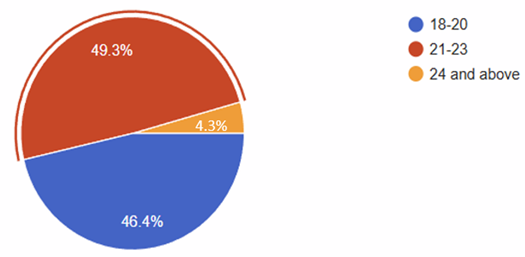
Figure 1 Distribution of
Respondents by Age |
The figure shows
that the majority of the respondents were aged 21–23 years old (49.3%),
followed closely by those aged 18–20 years old (46.4%), and a small portion
aged 24 and above (4.3%). This indicates that most respondents belong to the
typical undergraduate age range.
This suggests that the participants are in the developmental stage of
acquiring essential workplace competencies and are preparing to transition from
academic learning to practical application in the BPO environment.
|
Figure 2
|
|
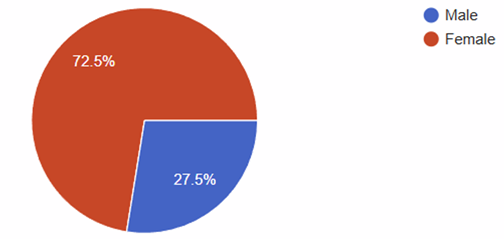
Figure 2 Distribution of
Respondents by Sex |
In terms of sex,
the figure above reflects that female students (72.1%) outnumbered male
students (27.9%), showing the higher representation of women in communication
and service-oriented academic programs. This trend aligns with the gender
composition of the BPO industry, where female employees constitute a
significant portion of the workforce due to the sector’s emphasis on
interpersonal communication, multitasking, and customer relations Philippine
Economic Zone Authority (2023).
|
Figure 3 |
|
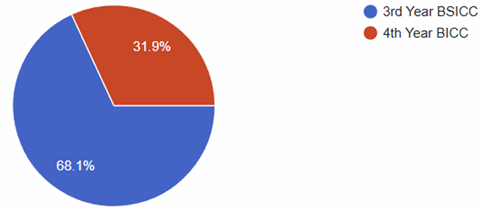
Figure 3 Distribution of
Respondents by Year Level |
Most respondents
were 4th-year students (72.1%), while 27.9% were in their 3rd year, indicating
that the majority have completed substantial coursework and are nearing
graduation. This makes them ideal respondents for competency assessment, as
they have undergone both theoretical instruction and practical exposure to
contact center operations.
|
Figure 4 |
|
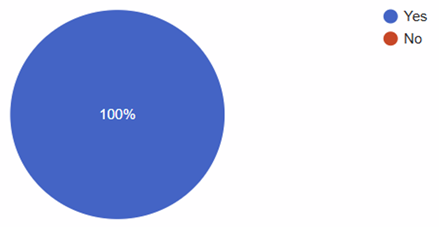
Figure 4 Respondents as to
Completion of Contact Center-Related Subjects |
The above figure
shows that all respondents (100%) reported having completed a Contact Center–related subject. This confirms that the respondents
have been exposed to the core curriculum and training components relevant to
the competencies under assessment. Such exposure ensures that their performance
in the study accurately reflects the learning outcomes of the Contact Center Services program.
|
Figure 5
|
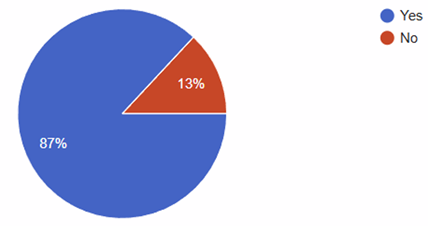
|
Figure 5 Respondents as to
Attendance in Any Contact Center-Related
Seminar-Training. |
The results show
that 86.8% of the respondents attended BPO or contact center–related
seminars or training. This finding suggests proactive engagement in
industry-linked learning activities that complement formal academic
instruction. Such participation indicates the students’ motivation to deepen
their understanding of workplace dynamics, technological applications, and
customer service practices in real-world settings.
Overall, the
profile of the respondents indicates a predominantly young, female, and
senior-level cohort with formal and supplementary exposure to contact center education. This background provides a solid
foundation for assessing their competencies and identifying areas where
curriculum alignment with industry standards can be strengthened.
Level of
Competence
Table 1
|
Table 1 Basic Competency |
||
|
BASIC
COMPETENCY |
Mean |
DV |
|
1.
Participate in Workplace Communication |
3.10 |
Satisfactory |
|
2.
Work in a Team Environment |
3.33 |
Satisfactory |
|
3.
Practice Career Professionalism |
3.17 |
Satisfactory |
|
4.
Practice Occupational Health and Safety Procedures |
3.19 |
Satisfactory |
|
OVERALL
MEAN |
3.20 |
Satisfactory |
Table 1 presents the level of competence of the respondents under Basic
Competencies. The overall mean score of 3.20, interpreted as “Satisfactory,”
indicates that students are generally capable of performing foundational
workplace tasks adequately. However, this also implies that further development
and consistency are necessary for them to fully meet industry standards. While
their competencies are acceptable, the results reveal areas for improvement in
skills essential to effective workplace performance and professional readiness.
This finding aligns with a semi-systematic review by Tushar
et al. (2023), which observed that although graduates
typically possess foundational employability skills, employers continue to
report gaps in consistency and advanced interpersonal competencies. Similarly, Siddique
et al. (2022) found that students often demonstrate basic competencies but still
exhibit persistent deficiencies in socio-technical and communication skills,
highlighting the need for targeted skill development to enhance workplace
readiness.
Table 2
|
Table 2 Common Competency |
||
|
COMMON
COMPETENCY |
Mean |
DV |
|
1.
Apply Quality Standards |
3.33 |
Satisfactory |
|
2. Perform Computer Operations |
3.17 |
Satisfactory |
|
OVERALL
MEAN |
3.25 |
Satisfactory |
Table 2 shows results for Common Competencies with
an overall mean of 3.25, which falls under the “Satisfactory” level. This
suggests that students possess a fair understanding of basic work processes and
the ICT tasks commonly required in the contact-center
industry, but that their performance would benefit from additional practice to
achieve higher accuracy, consistency, and alignment with professional quality
standards. Employer-facing studies of digital skills and graduate employability
report consistent skill-gaps between the digital/ICT competencies employers
demand and the competencies of entry-level graduates, especially in
communication, collaboration, and information/data literacy, which reduces on-the-job accuracy and
consistency unless addressed through targeted upskilling and work-integrated
learning Tee et al. (2024), World Economic
Forum (2023).
Table 3
|
Table 3 Core Competency |
||
|
CORE
COMPETENCY |
Mean |
DV |
|
1.
Communication Skills |
2.82 |
Satisfactory |
|
2.
Customer Service Skills |
2.79 |
Satisfactory |
|
3.
Customer Engagement Skills |
3.11 |
Satisfactory |
|
4.
Technical Operations Skills |
2.6 |
Developing |
|
5.
Professionalism and Work Ethics |
3.14 |
Satisfactory |
|
OVERALL
MEAN |
2.89 |
Satisfactory |
The results for
Core Competencies reveal an overall mean of 2.89, which falls under the
“Satisfactory” level. This indicates that students have acquired the
foundational abilities essential for contact center
operations but still need substantial improvement to attain a higher level of
proficiency. While their performance demonstrates an understanding of basic
customer service functions, notable deficiencies remain in confidence,
technical fluency, and adaptability—competencies that are indispensable for success
in the Business Process Outsourcing (BPO) industry. According to Murthy
et al. (2008), traditional training methods such as
lectures and role-plays yield only moderate skill development, whereas
simulation-based instruction significantly enhances communication accuracy,
responsiveness, and overall agent performance in call center
environments. Similarly, Ammachchi
(2023) highlighted that despite the Philippines’ strong BPO presence, a
widening skills gap persists, particularly in digital literacy and adaptability
to technological changes driven by artificial intelligence. These findings
align with the current study’s results, underscoring the need to integrate
simulation activities, mock calls, and scenario-based learning into the
curriculum to reinforce students’ practical competencies and elevate their
proficiency to meet industry standards.
The overall
findings reveal that students generally demonstrated a satisfactory level of
competence across all domains: basic, common, and core competencies, indicating
that while foundational skills are present, there is still room for improvement
to meet industry standards. Abelha et al.
(2020) noted that although graduates develop a
reasonable level of academic and employability competencies, a persistent
mismatch remains between the competencies acquired in school and those required
by employers. Similarly, Awwad
(2021) found that undergraduate students tend to
exhibit moderate competence across communication, leadership, and
critical-thinking domains, showing basic readiness but requiring additional
development to perform consistently in professional environments.
CONCLUSION AND RECOMMENDATIONS
The study revealed
that the respondents are predominantly young, with formal and supplementary
exposure to contact center education. This
demographic profile provides a strong foundation for competency development
aligned with industry needs. Across all domains, students exhibited a
“Satisfactory” level of performance. This indicates that while they possess
foundational workplace skills, there remain significant areas for improvement
to fully meet the standards of the contact center
industry. Specifically, students demonstrated adequate teamwork, communication,
and ICT-related skills; however, gaps were noted in technical fluency,
confidence, and adaptability, especially in Core Competencies. These findings
underscore the need to strengthen curriculum components that foster applied
learning and industry-level proficiency.
To address the
identified gaps in students’ competencies, it is strongly recommended to
enhance the existing curriculum by integrating more industry-relevant and
experiential learning strategies. Specifically, the curriculum should
incorporate role-playing activities, mock calls, simulation exercises, and
system practice drills that mirror real workplace scenarios. Embedding
industry-aligned modules and case studies will bridge the gap between
theoretical knowledge and actual practice, enabling students to develop
stronger communication, technical, and problem-solving skills. Strengthening
these curriculum components, in close collaboration with industry partners,
will better prepare students to meet the evolving standards and demands of the
contact center sector.
ACKNOWLEDGEMENTS
The researchers sincerely express their profound gratitude to Cagayan
State University–Carig Campus for endorsing this study for presentation at the
2025 TVET International Conference. This valuable opportunity has significantly
contributed to strengthening and promoting a culture of research within the
College of Humanities and Social Sciences.
REFERENCES
Abelha, M., Fernandes, S., Mesquita, D., Seabra, F., and Ferreira-Oliveira, A. T. (2020). Graduate Employability and Competence Development in Higher Education: A Systematic Literature Review Using PRISMA. Sustainability, 12(15), 5900. https://doi.org/10.3390/su12155900
Ammachchi, N. (2023, August 10). Widening Skills Gap and AI Leaps Put Philippines BPO Industry at a Crossroads. Nearshore Americas.
Awwad, F. A. A. (2021). Graduates Competence Assessment on Employability Skills: Partial Least Square-Structural Equation Modeling. Asian Journal of Economics, Business and Accounting, 21(17), 1–14. https://doi.org/10.9734/ajeba/2021/v21i1730486
COPC Inc. (2023). COPC Customer Experience (CX) Standard: Managing and Improving Customer Experience Operations. COPC Inc.
Inquirer.net. (2024, January 10). The $38.7-Billion BPO Industry: Filipino Workers’ English Skills Crucial to Success. Inquirer.net.
International Customer Management Institute. (2022). ICMI Contact Center Competencies and Best Practices. ICMI.
International Organization for Standardization. (2017). ISO 18295-1:2017—Customer Contact Centres—Part 1: Requirements for Customer Contact Centres. ISO.
Metrobank Wealth Insights. (2024, April 8). Philippines’ BPO Sector Seen to Shrink Amid Shift to AI. Metrobank Wealth Insights.
Murthy, N. N., Challagalla, G. N., Vincent, L. H., and Shervani, T. A. (2008). The Impact of Simulation Training on Call Center Agent Performance: A Field-Based Investigation. Management Science, 54(2), 384–399. https://doi.org/10.1287/mnsc.1070.0818
Philippine Economic Zone Authority. (2023). PEZA Annual Report 2023. PEZA.
Philippine Institute for Development Studies. (2023). The Learning Crisis in Philippine Education: An Overview (PIDS Policy Notes No. 2023-17). PIDS.
Ramotowski, J. (2025). Global Outsourcing Trends and Economic Resilience in Southeast Asia. Journal of Business and Economics, 12(1), 44–59.
Siddique, S., Ahsan, A., Azizi, N., and Haass, O. (2022). Students’ Workplace Readiness: Assessment and Skill-Building for Graduate Employability. Sustainability, 14(3), 1749. https://doi.org/10.3390/su14031749
Technical Education and Skills Development Authority. (2023). Training Regulations for Contact Center Services NC II. TESDA.
Tee, P. K., Wong, L. C., Dada, M., Song, B. L., and Ng, C. P. (2024). Demand for Digital Skills, Skill Gaps and Graduate Employability: Evidence from Employers in Malaysia. F1000Research, 13, 389. https://doi.org/10.12688/f1000research.148514.1
Tushar, H., Hasanuzzaman, M., Sooraksa, N., and Nanta, S. (2023). Global Employability Skills in the 21st Century Workplace: A Semi-Systematic Literature Review. Heliyon, 9(11), e21351. https://doi.org/10.1016/j.heliyon.2023.e21351
|
|
 This work is licensed under a: Creative Commons Attribution 4.0 International License
© ShodhGyan 2026. All Rights Reserved.